Discover your inside story with AncestryDNA®

September 21, 2014

Welcome Home Mable! Lost but now Found

A few days ago I posted about looking for Mable Savage

Welcome Home Mable! Lost but now Found
Mable Salvadge ca 1890s
When my husband bought lovely self-portrait (not a selfie, an actual painting done ca 1890s by Mable herself) , we were told that Mable (Mabel) Savage was a teacher in Stratford Ontario. But we've never been able to find Mable. Until yesterday.

Many of my wonderful readers tried to help find Mable. Several Facebook friends also tried to find her. We didn't have much to go on, just her name, place of residence, occupation and that she was thought to have never married.

One of my Facebook friends and reader of this Olive Tree Genealogy blog spotted my post and went on a hunt. Diligent and creative searching on Ancestry.com led him to Mable Salvage (Salvadge), an unmarried teacher in Stratford Ontario. Further research on my part led to the conclusion that this is indeed "our" Mable! 

16 year old Mable is found living with her younger siblings and her widowed mother Fannie Salvage in Stratford, Perth County Ontario in 1891. Her grandfather William Ruff, 80, is living with the family. William and his daughter Fanny were born in England and Fanny was working as a carpet weaver to support the family.

Ten years later Mable is found living in the town of Mitchell which is just outside of Stratford. Her occupation is recorded as teacher and her date of birth 9 August 1874.

Going back to 1881 provides her father's name - Robert Salvadge age 42 and sadly the deaths of her father Robert and older brother Charles in October 1882 of Typhoid Fever.

Mable and her younger sister Louisa lived together for many years at 176 Hibernia Street in Stratford and are found together as early as 1935.  By the 1957 Voter's List, Louisa was not with Mable.

I also found Mable Salvadge on a list of school teachers in Ontario as of November 1932 and she was recorded as teaching at the Avon School. 

So now we have a bit of detail to type up and tape to the back of the beautiful painting that Mable created of herself as a young woman. This is what I love about collecting - finding the stories of the individual or individuals who once owned the item, and giving them a voice after many years of silence.

Welcome home Mable!


September 20, 2014

Nursing Sister Philips WW1 Photo Album p. 21

p. 21 R Hospital Ward 30. 34 beds
This Photo Archive consists of a small autograph album (6.5" by 5.25") kept by Constance (Connie) Philips as a memento of her time serving as a nurse during World War One.  

The majority of the photos and items are from 1915, when she served as a nurse in France and Britain. 

The album and all photographs, postcards, and other ephemera contained in the album belong to Karin Armstrong and may not be copied or republished without her written permission. The images will be published on Olive Tree Genealogy with permission. 

Each image has been designated an "R" for Recto or a "V" for Verso plus an album page number. Recto is the right-hand side page of a bound book while Verso is the left-hand side page. 

I will be posting the entire album and my additional research on the individuals identified in Connie's album over the coming months so please check back frequently to view these historic photos. The easiest way to see what has been published is to click on the topic "Nursing Sister WW1 Photos" in the vertical menu bar on the right side of your screen. You can also click on that phrase at the bottom of this post.

 
p. 21 V Cartoon drawing by L. Cpl T. Satch.1925

"If you like an officer, you salute him. If not you tie your boots"

September 19, 2014

Looking For Mable

Several years ago, my husband bought a portrait of a beautiful woman. According to the antique dealer who owned the store,  the painting was done by Mable (or Mabel) Savage and was her self-portrait. Mable was said to be a teacher in Stratford Ontario Canada.

For years we have searched for Mabel to no avail. We do not know if she was a Savage by birth or by marriage. We estimate her date of birth to be ca 1870-1880 and this painting done ca 1890-1900.

Do you recognize Mable?  This is not the original frame. You can see from the shadowing that the portrait was originally in an oval frame that was not with the portrait. My husband bought the portrait loose and chose the mount and frame you see below.


September 18, 2014

WW 1 Photo Album Archive page 25

Continuing on with my WW1 Photo Album archive here is the 25th page in my mother's cousin Doris Simpson's album.

WW 1 Photo Album Archive page 25
Simpson Photo Album Toronto Ontario Canada ca 1920s
There are only 2 photos on this page. In the photo on the left I am fairly confident that is my Grandmother Ruth (Simpson) Fuller Richardson Bates (the taller woman). The photo on the right is Doris herself (with the tie at her neck) and I think that is her mom Cordelia (Cook) Simpson standing beside her.


September 17, 2014

Crowdsourcing for Genealogy - What Does the Record Say?

Today I am crowdsourcing from other genealogists. An 1805 record for my ancestor John Greenlees has me stumped. There is one word I cannot figure out. My husband and I have spent hours going over it and comparing it to other words on the record page in hopes of understanding the clerk's letter formations.

Now it's time to ask for help. Here is the cropped image. My ancestor is John Greenlees from Fermangh Ireland. The word I cannot read is the top line. It is the word after Fermangh and it is in the column heading "Where Born: Parish"

Crowdsourcing for Genealogy - What Does the Record Say?
I have looked at the parishes and townlands in Fermanagh - and there are a lot! I still cannot figure out what that word says.  We think, after much deliberation, that the first letter might be "A".

To compare the letter formations, here is the complete record page. I hope someone more familiar with the places in Fermanagh or with a better eye than I have, will be able to help. You can also view  a larger image here. You can enlarge it with the magnifier when it loads. Thank you for any ideas!


September 16, 2014

Scanning Family Photos to Reveal Genetic Disorders

There's an interesting article on Newsweek called Scanning Family Photos Can Reveal Rare Genetic Disorders

Scanning Family Photos to Reveal Genetic Disorders
Software for Scanning Faces for Genetic Disorders
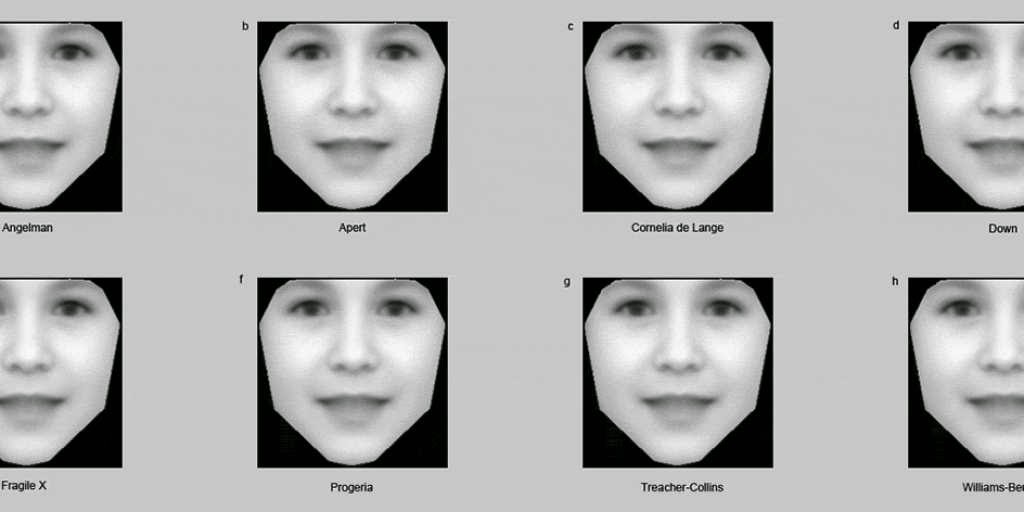
According to the article, research led by Dr. Nellaker and Prof. Zisserman at the University of Oxford has have developed software that can detect the risk for genetic disorders in children, such as Down and Treacher Collins syndromes, just by scanning old photographs of their family members.

30 to 40 percent of genetic disorders involve detectable abnormalities in the cranium and face. The Oxford project, called Clinical Face Phenotype Space scans family photos and cross-references them with a database built from images of people with known genetic disorders. 

The algorithms and other details are explained in the Newsweek article. It's an intriguing concept and  I'll be watching this project to see what new developments, if any, occur.

September 15, 2014

DNA Gave My Husband a Completely Different Great Grandfather

A few months back I wrote about a surprising DNA match with my husband in a post called DNA Results Leave us Gob-Smacked! 
DNA Gave My Husband a Completely Different Great Grandfather
Comparison of hubs' mother's DNA with Alice
Hubs and another man were a .64% match with a predicted relationship of 2nd or 3rd cousin. I don't have permission to use his name so I'll call him John. John's family tree showed no surnames that matched hubs. Emails to John revealed that he was born in the same small town as hubs and his ancestors had settled there many generations prior, just as hubs' ancestors had done. 

A 2nd cousin match meant that John and hubs probably shared a great-grandfather, while a 3rd cousin match meant they shared a 2nd great-grandparent.

I was puzzled, as we had researched hubs' genealogy several generations back without seeing any link to John and his lines. John also had done extensive research on his lines several generations back. We knew who hubs' and John's great and 2nd great grandparents were - and they were not the same. 

John was as intrigued as we were, so our next step was to have John's mother and hubs' mother tested. We also tested hubs' father just in case the match was on his side. The DNA results were in - hubs matched John's mother (let's call her Alice) with 3.00% shared. Because we had also tested hubs' mother and father, we knew if matches were on his maternal or paternal side. It was conclusive - it was on his maternal side. 

A look at the matches for hubs' mother showed that she matched Alice (John's mother) with 6.9% shared and was estimated as a 1st or 2nd cousin. First cousins share grandparents, while 2nd cousins share great-grandparents. 

Comparison of hubs' mother's DNA with John

Since DNA doesn't lie, I had a closer look at John's family names, especially the names of his great-grandparents on his mother's side. John's great-grandparents were George Cooper & Sarah Jane Jickling. Suddenly I remembered a little tidbit of family lore that had passed on from hubs' grandmother on his mom's side. His grandmother had always claimed that hubs' grandfather Bert Holden was not really the son of Bristol Holden because Bert's mother Elsie Phyllis Markham had been "fooling around with the hired man named Cooper" If this were true it meant that hubs' great grandpa (his mother's grandfather ) was not Bristol Holden but someone named Cooper. 

Bingo! It looked like that family rumour might be true. I began researching the Cooper family in and around St. Mary's and found lots of supporting evidence for the rumoured parentage of Bert Holden. 

At the time Elsie became pregnant with Bert (August 1917) one of George and Sarah Cooper's sons lived beside Elsie Markham's brother Albert. One of George and Sarah's sons and a nephew lived beside Bristol Holden on his farm just outside of town. Who better to be "a hired hand" on the farm of Bristol Holden than either the son or the nephew?

Elsie married Bristol Holden 7 months before Bert was born.  She was 19 years old and had only arrived in Canada from England 4 years earlier. Her only family was two brothers one of who was killed 10 days before Bert was born.  Elsie was orphaned at 6 months of age and passed from relatives to strangers until her oldest brother (who was a Home Child sent to Canada at the age of 11) saved enough money to send for her in 1913. 

It seems very likely that poor Elsie found herself pregnant, either from the married son of George and Sarah Cooper or (more likely) the unmarried nephew, who according to John's mother Alice, was a known "rogue". Given her situation she no doubt was happy to marry Bristol. Did he know the baby was not his? We will never know. Elsie may have told him. Or she may have initiated some intimate moments with him, then told him she was pregnant. He would of course assume the baby was his. 

In the end it doesn't matter what the details are. We cannot blame Elsie. It was 1917 and she was a  pregnant unmarried girl. She had few choices. By all accounts she and Bristol had a happy marriage and she was a good mother. In the end that is what matters.

But back to the nephew. If he was Bert Holden's biological father, then Alice and hubs' mother are 1st cousins twice removed. Allice's grandparents were George Cooper and Sarah Jickling and this same couple would be hubs' mother's 2nd great-grandparents. 

The line of descent would then be:
  • George Cooper (1843-1922) & Sarah Jickling
  • George's son Herman Cooper (1873-1958) & Caroline Martin
  • Herman's son Gordon Alfred Cooper (1899-1970)
  • Bert Holden
  • Hubs' mother
  • Hubs
 Our theory is that Gordon Alfred Cooper was the biological father of Bert Holden. We are continuing our research to try to prove or disprove this theory. We may never find out whether it was George or one of his uncles or his father but we do know that George & Sarah are direct ancestors of hubs' mother.  We have eliminated some sons and grandsons of George & Sarah as being too young or too old. We have narrowed the suspect list to those with the closest proximity and who might have been "the hired hand" on the Holden farm in 1917.

One last item is that we have seen a photo of Gordon Alfred Cooper's legitimate daughter and there is a striking resemblance to hubs' mother at the same age. Just one little tantalizing bit more to add to the puzzle.

I would love to find some descendants of Caroline Martin's parents George King Martin & Hannah Robinson, have their DNA tested and see if they match hubs' mother. That should tell us if Bert's biological father is indeed Gordon Cooper or if we need to eliminate him and look at his uncles again.

September 14, 2014

Certificate Frederick Swindells, a Power Loom Overlooker Found

 This lovely print was discovered in a local antique shop yesterday and I wanted to share it in case a descendant wishes to purchase it.

The handwritten label, signed by 3 men, reads:

This is to certify that Fred W. Swindells was admitted a member of the above General Union in the Leigh District on the 5th of July 1907

The bottom of the certificate reads  

"Campbell & Tudhope  Chromo Lith  Glasgow"

The Union is the General Union Associations of Power Loom Overlookers. The seller is asking $250.00 and the Antique Store is the Barrie Antiques Centre in Barrie Ontario Canada.

Being the curious sort I couldn't resist looking for Fred W Swindell on Ancestry.com. To my delight I found him in the 1911 census with his wife Emily.

He is listed as a Silk & Cotton Weaving Overlooker, age 25 and born Macclesfield, Cheshire, England but living in the Leigh District of Lancashire England.  His full name is recorded as Frederick William Swindell.

Wondering how his certificate ended up in Ontario Canada I checked immigration records on Ancestry.com and found him visiting England in various years - and listed as a citizen of Canada. So it appears he settled in Canada at some point in time.

Update: I just found Emily Swindells arriving in Canada in 1921, heading to join her husband in Guelph Ontario. That is where both my parents were born and my roots there go back to the 1840s.

September 13, 2014

500 Child Skeletons from Irish Famine found in Workhouse Grave


500 child skeletons from Irish famine found in grave
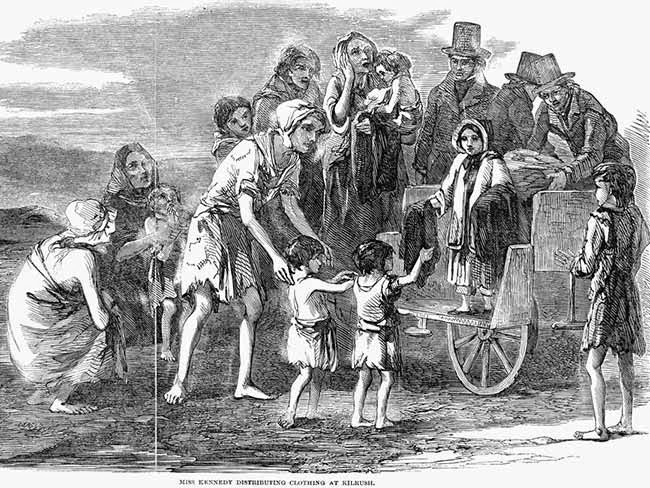
Seven years ago the skeletons of 500 children buried in a mass grave in what was once the Kilkenny Union Workhouse.

545 children were buried within the grounds of the Kilkenny Union Workhouse between 1847 and 1851, two thirds of whom were under age six when they died. Studies on the teeth revealed that scurvy was rampant among the children

Skeletal studies found that all of the infants between six and twelve months – and three quarters of the children between one and twelve years of age – had been affected by stunted growth.

Read more at 500 child skeletons found in workhouse mass grave tell of struggles during the Great Hunger

Image credit: wikimedia commons Irish Famine

September 12, 2014

The Chirurgeon's Apprentice: The Saddest Place in London England

The Chirurgeon's Apprentice: The Saddest Place in London England 

Recently I stumbled on a fascinating and moving blog post called The Saddest Place in London: A Story of Self-Sacrifice


The article on is about a little corner of London England called Postman’s Park, where, to quote from the blog post:
On a stone wall, underneath a makeshift overhang, are a series of ceramic plaques, each one painted beautifully with the names of people who died while trying to save the lives of others.
Take a moment to see the plaques and read the stories.  

Image of plaque for Solomon Galaman in Postman's Park, London England on

September 11, 2014

Franklin Expedition Ship Found After 169 Years!

Franklin Expedition Ship Found After 169 Years!
HMS Terror
Queen Elizabeth sent her congratulations to all Canadians a few days ago. Why? Because we found one of the lost ships from the Franklin Expedition after 169 years! Searchers are not yet sure if they have found HMS Erebus or HMS Terror.

The two ships of the Franklin Expedition and their crews disappeared during an 1845 quest for the Northwest Passage.  They were the subject of many searches throughout the 19th century, but the mystery of exactly what happened to Franklin and his men has never been solved. All 128 members of the Expedition died when their ships became locked in ice while exploring the Arctic in a search for the Northwest Passage.

Inuit testimony in the late 1840s  claimed that one ship sank in deep water west of King William Island, and one ship went perhaps as far south as Queen Maud Gulf or into Wilmot and Crampton Bay. The location of this wreck backs up that testimony which was widely discounted previously.

Earlier searches had discovered the bodies of a dozen or so men from the Franklin Expedition on King William Island. Watch a video about the discovery of the wonderfully preserved mummies at Franklin Expedition Mummies

A search team made up of a partnership between Parks Canada, the Royal Canadian Geographical Society, the Arctic Research Foundation, the Canadian Coast Guard, the Royal Canadian Navy and the government of Nunavut made the discovery.  They confirmed it on Sunday using a remotely operated underwater vehicle recently acquired by Parks Canada. They found the wreck 11 metres below the water’s surface.

Since 2008, Parks Canada has led six major searches for the lost Franklin ships. Four vessels — the Canadian Coast Guard ship Sir Wilfrid Laurier, the Royal Canadian Navy’s HMCS Kingston and vessels from the Arctic Research Foundation and the One Ocean Expedition — led the search this summer.

Read more and watch videos at Long-lost ship from Franklin expedition found and at Lost Franklin expedition ship found in the Arctic


September 10, 2014

Nursing Sister Philips WW1 Photo Album p. 11

This Photo Archive consists of a small autograph album (6.5" by 5.25") kept by Constance (Connie) Philips as a memento of her time serving as a nurse during World War One.  

The majority of the photos and items are from 1915, when she served as a nurse in France and Britain. 

The album and all photographs, postcards, and other ephemera contained in the album belong to Karin Armstrong and may not be copied or republished without her written permission. The images will be published on Olive Tree Genealogy with permission. 

Each image has been designated an "R" for Recto or a "V" for Verso plus an album page number. Recto is the right-hand side page of a bound book while Verso is the left-hand side page. 

I will be posting the entire album and my additional research on the individuals identified in Connie's album over the coming months so please check back frequently to view these historic photos. The easiest way to see what has been published is to click on the topic "Nursing Sister WW1 Photos" in the vertical menu bar on the right side of your screen. You can also click on that phrase at the bottom of this post.


p. 11 R Staff outside a hut

p. 11 V burials

September 9, 2014

Vote for Your Favourite Genealogy Rock Star

It's Genealogy Rockstar Time in the Genealogy Community. Choose your favourites from nearly 150 nominees.  What is a Genealogy Rockstar? John D. Reid defines this as
Rockstar genealogists are those who give "must attend" presentations at family history conferences or as webinars. Who, when you see a new family history article or publication by that person, makes it a must buy. Who you hang on their every word on a blog, podcast or newsgroup, or follow avidly on Facebook or Twitter?
The list of nominees is here Please cast your vote at Rockstar Genealogist(s) 2014: voting now open before Saturday September 13th. 

Yes Olive Tree Genealogy is on the list of nominees under my name Lorine McGinnis Schulze, so if you want to vote for me, that's great! I'd love it if you did. If you don't want to vote for me, that's okay but  please do vote for someone.

Credit: "Gold Star And Silver Star Award" by pixtawan from FreeDigitalPhotos.net


September 8, 2014

Has Jack the Ripper Been Found Through DNA?

A few days ago the Daily Mail UK published an article written by Russell Edwards. Mr. Edwards believes he has found the true identity of Jack the Ripper, the serial killer responsible for  at least five grisly murders in Whitechapel in East London during the autumn of 1888.

The story is compelling. Mr. Edwards owns a shawl said to have been found on or near the body of Catherine Eddowes, one of the Ripper's victims. One of the policeman who investigated the murder in 1888 took the shawl home to his wife and she immediately packed it away, unwashed.

The shawl was passed on from one generation to the next until  2007 when the current owner at that time decided to auction it off.  Edwards, a self-confessed amateur detective, bought the shawl and enlisted the help of Dr Jari Louhelainen, a world-renowned expert in analyzing genetic evidence from historical crime scenes. His credentials are top-notch in his field.

Dr Louhelainen was able to extract 126-year-old DNA from the material and compare it to DNA from descendants of Eddowes, resulting in a perfect match. Thus the shawl was proven to be Eddowes, which answered questions about its provenance.

DNA samples from what Dr. Loouhelainen believed to be semen on the shawl were then compared with a descendant of the sister of the prime suspect, again with a perfect match as the result. Mr. Edwards believes this new DNA evidence proves conclusively that Aaron Kosminski, a Polish Jew who had fled to London with his family, escaping the Russian pogroms, in the early 1880s, was Jack the Ripper. Edwards'  book Naming Jack the Ripper will be published by Sidgwick & Jackson today, September 9th. 

Some questions spring to mind - why did they not test descendants of all the suspects in case another match was found? How do they know that Mr. Kosminski's semen was found at the scene because he was a customer of Ms. Eddowes, rather than her murderer? 

I will almost certainly purchase the book in hopes of reading more details of the analysis of the DNA sample. Although the shawl is not listed in the inventory of items found on Catherine Eddowes or in her room, I do not find that too unusual. I suspect the police officer who supposedly asked permission to keep the shawl, may have taken it home with him before the inventory was taken - with or without permission of his superiors. What did intrigue me was the listing of a skirt patterned with Michaelmas daisies. The same design of Michaelmas daisies occurs on the shawl.

Continue reading full details at WORLD EXCLUSIVE: Jack the Ripper unmasked: How amateur sleuth used DNA breakthrough to identify Britain's most notorious criminal 126 years after string of terrible murders

September 7, 2014

Sharing Memories Good News

 
I'm excited to announce Sharing Memories prompts are now published in an ebook Writing Your Memoirs For Descendants: Prompts for Recording & Preserving Your Family Stories and Memories

Many new prompts have been added to this book. My weekly Sharing Memories prompts began in December 2009 and ended last week with a total of almost 200 prompts designed to jog memories of childhood experiences and stories. 

I encourage my readers who want to preserve family memories and stories to continue their weekly writing and recording. If we don't record our memories they will be lost within a few generations.

So why wait? Start recording your memories today!

P. S. this ebook can be read on the free Kindle App for smartphones or tablets or the free Amazon Kindle Cloud Reader.

September 6, 2014

Nursing Sister Philips WW 1 Photo Album p. 12

This Photo Archive consists of a small autograph album (6.5" by 5.25") kept by Constance (Connie) Philips as a memento of her time serving as a nurse during World War One.  

The majority of the photos and items are from 1915, when she served as a nurse in France and Britain. 

The album and all photographs, postcards, and other ephemera contained in the album belong to Karin Armstrong and may not be copied or republished without her written permission. The images will be published on Olive Tree Genealogy with permission. 

Each image has been designated an "R" for Recto or a "V" for Verso plus an album page number. Recto is the right-hand side page of a bound book while Verso is the left-hand side page. 

I will be posting the entire album and my additional research on the individuals identified in Connie's album over the coming months so please check back frequently to view these historic photos. The easiest way to see what has been published is to click on the topic "Nursing Sister WW1 Photos" in the vertical menu bar on the right side of your screen. You can also click on that phrase at the bottom of this post.

p. 12 R Funeral Service

p. 12 V Nurses

September 5, 2014

I Want....

I Want....
The following article is © Barbara A. Brown and posted on Olive Tree Genealogy blog with her permission

Yep -- I want ancestors with names like Rudimentary Montagnard or Melchizedick von Steubenhoffmannschild or Spetznatz Gianfortoni, not William Brown or John Hunter or Mary Abbott.

I want ancestors who could read and write, had their children baptized in recognized houses of worship, went to school, purchased land, left detailed wills (naming a huge extended family as legatees), had their photographs taken once a year -- subsequently putting said pictures in elaborate isinglass frames annotated with calligraphic inscriptions, and carved voluble and informative inscriptions in their headstones. I want relatives who managed to bury their predecessors in established, still-extant (and indexed) cemeteries.

I want family members who wrote memoirs, who enlisted in the military as officers and who served in strategically important (and well documented) skirmishes. I want relatives who served as councilmen, schoolteachers, county clerks and town historians. I want relatives who 'religiously' wrote in the family Bible, journaling every little event and detailing the familial relationship of every visitor.

In the case of immigrant progenitors, I want them to have arrived only in those years wherein passenger lists were indexed by National Archives, and I want them to have applied for citizenship, and to have done so only in those jurisdictions which have since established indices.

I want relatives who were patriotic and clubby, who joined every patrimonial society they could find, who kept diaries, and listed all their addresses, who had paintings made of their horses, and who dated every piece of paper they touched. I want forebears who were wealthy enough to afford, and to keep for generations, the tribal homestead, and who left all the aforementioned pictures and diaries and journals intact in the library.

But most of all, I want relatives I can find!!!

Note that Ms. Brown's "I Want" article was originally posted in 1994 to the National Genealogical Conference, FIDO bulletin board forum. This article also appeared in IIGS Newsletter August 1998 with her permission. Ms. Brown offers lookups in Who's Who books from 1901 to 1978 and Social Register Directories from 1917 to 1971. She can be reached at babrown12@yahoo.com

September 4, 2014

Identifying a Loyalist Shipwreck from a Cannon

Identifying a Loyalist Shipwreck from a Cannon
This is a fascinating archaeological find. A five-foot-long cannon  was recovered from an eighteenth-century shipwreck near the St. Augustine Inlet. 

The ship was part of a huge fleet that evacuated British Loyalists from the colonies near the end of the American Revolution. It sailed from Charleston and was probably carrying both civilians and soldiers who were seeking refuge in St. Augustine. It is hoped that the team can identify the ship and find records of its passengers.

Continue reading at Cannon Could Help Identify Loyalist Shipwreck

September 3, 2014

WW 1 Photo Album Archive page 24

Continuing on with my WW1 Photo Album archive here is the 24th page in my mother's cousin Doris Simpson's album. It looks like we are in to the mid 1920s now.

 This page in the album only held 2 photos. On the left is Doris' cousin Vera Simpson born 1925, and on the right is Doris with her dog.
 Vera was the daughter of my grandmother's brother Sydney (Uncle Syd) Simpson and his wife Ellen (Aunt Nell) Webb.


September 2, 2014

More Questions Than Answers: The Fun of Genealogy Research

Yesterday I posted about my re-evaluation of an old record I obtained several years ago.  It can be read at In-depth Review of a Record Leads to a Genealogy Solution!
Carrying on with my new theory that my  ancestor Joseph McGinnis with wife Fanny, their baby daughter Bridget and Fanny's sister Margaret Downey, arrived in Quebec from Ireland sometime in late June or early July 1846.

My good friend Sue Swiggum of TheShipsList website, explained that the trip took on average 42 days then  new emigrants were encouraged to move out of Quebec city, and out of Montreal pretty quickly. Since Joseph was sent on from Montreal to Hamilton on July 9, 1846 I might expect him to have arrived by ship end of June or 1st of July.

Since I know the family came from Belfast and area, I decided to check British newspapers for notices of ship departures from that port to Quebec. I found several arriving on July 3rd but that would almost certainly be too late. Then I found a notice which looked like a possibility.

Friday 05 June 1846
Armagh Union. Monday 22 paupers left this place for Belfast to embark on the Belinda for Quebec  sent by the board of guardians by this Union. The emigrants were very comfortably clad, and otherwise equipped for their journey, and were accompanied by the efficient clerk to the Baord, Mr. M. McNeal Johnston and Mr. McCall, master of the house 


However Sue informed me that the Belinda didn't arrive in Quebec until July 20th so that ship is out of the running. She found two ships sailing from Belfast that seemed like good possibilities:

Arrival 24th June, ship MILTIADES left Belfast 14th May, with 391 passengers. Sue checked the Quebec papers and there were no more Belfast arrivals in later June issues. Checking the  9th July issue there were  no more ships arriving from Belfast.

There was an earlier arrival, on June 18th of the bark CHIEFTAIN, McEwine, from Belfast on May 1st with 182 passengers. 


The Miltiades looked like the best bet given it's arrival date just 15 days before Joseph and family were sent on at the expense of the government. I also checked Marj Kohl's Immigrants to Canada and found this reference to the Militiades:

Miltiades  from   Belfast     arrived 24 June.  21 people were sent on with assistance 

Since Joseph's name is on the list of those who could not afford to continue their journey and were transported out of Montreal to other settlement areas, things are looking pretty good for my Joseph McGinnis to be one of those 21 people sent on with assistance. 

There's a very nice transcribed ad for this sailing on the Irish Emigration Database
 FOR QUEBEC.

          THE Splendid First-class Coppered Ship,
             MILTIADES, of Belfast,

             674 Tons Register, 1,000 Tons Burthen,
                  WM. [William ?] GROOM, Commander,

To Sail, direct from Belfast, on TUESDAY, the 12th day
of May, on which day Passengers will require to be on board.
   This Ship's well-known superior accommodations, and
Captain Groom's kindess and attention to Passengers,
together with his great experience as a navigator, render
this conveyance most desirable for persons about to
emigrate.
   As the "Miltiades" is filling up fast, to prevent
disappointment, immediate application is recommended to
                    DAVID GRAINGER, Dunbar's-Dock.
   Belfast, 20th April, 1846.
A search of British and Irish newspapers provided me with the advertisement for the Militades in the Belfast Newsletter


The Irish Emigration Database also had this transcript for the Miltiades just prior to her sailing

  NOW IN PORT.

      NOTICE TO PASSENGERS FOR QUEBEC.

          ALL persons who have engaged
      Passages in the Ship "MILTIADES,"
     are requested to be in Belfast, to go
     on board on TUESDAY, the 12th May, as
     she goes to sea the first fair [wind]
              DAVID GRAINGER, Dunbar's-Dock.

  Belfast, 4th May, 1846.

 The Miltiades will be succeeded by the splendid
new Ship "BELINDA," WM. [William?] KELLY, MASTER,
1,200 Tons Burthen, to sail for QUEBEC about the
25th of May; due Notice will be given of the exact
day of sailing.
 June 1846 saw the arrival of the Miltiades in this notice. No day was given.

 Arrived out at Quebec, the ship Miltiades, of
Belfast, Groom, master, after a quick passage
of 35 days-all well.

My search in British and Irish newspapers also brought up some interesting details of the Miltiades and her journey. The Belfast Newsletter of June 19, 1846 had a notice that the ship, having left Belfast on the 25th of May had been spotted by the Ruby Castle at Latitude 48 and Longitude 23


A check reveals its position was about 1/3 of the way on its voyage. It was about 630 miles from the coast of Ireland and about 1400 miles from Newfoundland. Interestingly, another notice in the May 16th edition of the London Standard indicates that the Miltiades left Belfast for Quebec on May 14. This sail date seems more in line with the advertised date of May 12th. Ships often left later than they hoped but a sail date of the 25th is almost 2 weeks late.

From Montreal, Joseph and family would have been given passage (paid for by the Government for indigent immigrants) on a steamer to Hamilton. According to Marj Khol's website:

The actual cost to the Department of an adult passage, with an allowance of 1 cwt. [Lorine's note: 1 cwt.=100 pounds] of luggage, from Quebec to Hamilton, a distance of 571 miles, is 20s. 9d., = 16s. 4½d. sterling. The time required is 72 to 80 hours.
I can imagine Joseph, Fanny, Margaret and the baby struggling on board a steamer with their trunks packed full of belongings - no doubt that included bedding, cookware, china, utensils, candles if they had any, perhaps pillows, items for the baby, and as much clothing as they could fit in to their trunks. They were very poor so may have had even less than I have listed here.

Once they reached Hamilton, Joseph and his family would have found life even more difficult. It was not until the summer of 1847 that the city discussed erecting a platform or gangway running into the water of Burlington Bay with a shed over it for use of immigrants. The Council also contemplated procuring a building to be used as a hospital and the erecting of sheds in case of sick immigrants arriving.  But I find no evidence that any kind of sheltering or assistance was in place in 1846.

The population of Hamilton in 1846 was under 10,000 and the large influx of impoverished Irish immigrants must have been overwhelming. Luckily Joseph had family members in Puslinch Township near Guelph so he had a few options for finishing the journey.

He might have had enough money, or been able to earn enough, to hire a cart or wagon to head up to the Guelph area. It is far more likely though that he and his family either hitched a ride with a returning farmer or sent for one of their McGinnis relatives to come down and get them.  It was another 30 miles to Guelph and Joseph's relatives lived in Puslinch which was on the way to Guelph. The road was rough and July is prime time for mosquitoes, so the journey must have been horrendous. It might have taken the family another 3 or 4 days to reach their final destination, depending how long they had to spend in Hamilton before continuing on.

In summary, I don't have proof of these suppositions. But they are my working theory based on what evidence and clues I have been able to find.  Thhe details, based on certain facts and best possibilities, help me to bring my ancestors to life. My great-great-grandparents are more alive for me today than ever before.

I will keep searching in hopes of finding facts to support my theory or disprove it. Meantime I treat my story above with caution, and advise any descendants to remember - it is just a story based on what few facts are available.


September 1, 2014

In-depth Review of a Record Leads to a Genealogy Solution!

Several years ago I sent for a transcribed record. It was for a Joseph McGinnis who was being sent from Montreal to Hamilton in July 1846. I hoped it was my ancestor who I knew had arrived from Ireland in Upper Canada (Ontario) between January 1846 and  September 1847. Since ships passenger lists to Canada did not have to be kept before 1865, trying to find an ancestor's arrival is challenging. 

However I was disappointed because the abstract recorded Joseph with two adult females and no children. Since I knew that Joseph and his wife Fanny came during the Irish famine with a daughter under the age of 1, this record could not be the right family.

I didn't have access to the original record so I set the record aside but didn't discard the idea completely that somehow it might be my Joseph. Perhaps the record was in error and should have read Joseph and 1 adult female and 1 child? That was my rather vague hope. With the record tucked away I moved on to other research but it was always in the back of my mind. 

This year I had a chance to view the actual image of the record set that contained Joseph's name. To my disappoinment, the page definitely showed Joseph and 2 Adult women being sent on to Hamilton at the Government's expense. 

I decided to study the document carefully. My first puzzle was the ditto marks (") in several of the columns. If I followed up to where the ditto marks began on Joseph's page, it seemed to indicate that the numbers in the 4 columns were: 1, 2, 2, 4. There were no column headings on the page with Joseph's name but the most logical thing would be if those columns showed Adult males, adult females and perhaps male and female children.if so, this was most definitely not my Joseph.

So off I went to find the first page of this record set. What I found confused me even more because the 4 column headings were: Adults M (male), Adults F (female), Male Adults, Female Adults.

Why would the clerk record adults twice? That made no sense. Because it made no sense I knew that there had to be a logical explanation. Perhaps the description of this record set would help. 

Before I tried to find the description I had another puzzle to solve. Some of the numbers were written in the first set of 2 columns, but some were in the second set. They were never in both.

I knew I need to scroll back through the microfilm until I found page 1. 

And there it was - the answer to my question. Reading very carefully and thinking about this description, the answer became clear. It was in the phrase  "shewing [showing] the adult persons single or in families..." Aha! The clerk needed to differentiate between married and single individuals. The columns were obviously for married adult men, married adult women, single men and single women! 

That also explained why some individuals were marked in Column 1 or 2 (they were married!) and others in Column 3 or 4 (they were single) 

But what about those ditto marks? A careful look at  the whole page showed that they could not be ditto marks because the totals added at the bottom would not work out. Those totals only worked by adding the actual numbers in each column and ignoring the ditto marks. 

It was pretty obvious now that what I thought were ditto marks (") were something else. And in fact a better look at the very last column for destination showed that the clerk used "do" for "ditto". Those marks (") meant zero, that is, no number in that column. 

And then came the biggest AHA! moment of all! This record set only recorded the numbers of adults traveling westward! It did not record numbers of children in the family. 

Going back to Joseph McGinnis and his record I took another look. A theory was popping into my head and I wanted to be sure I understood his record before formulating it aloud.

The original abstracted transcript I had received several years before was correct. Joseph McGinnis and 2 adult females were being sent on from Montreal to Hamilton on July 9th 1846. But the very important fact that had not been sent with the transcript was that the number of children in families were not recorded! 

This could easily be my Joseph with his wife Fanny and baby daughter Bridget. As for the second adult female, I have a very good possibility for that woman. Joseph's brother Daniel married a woman named Margaret Downey in Upper Canada in late 1846 or early 1847. My Joseph McGinnis' wife was Fanny Downey. I have always theorized that Margaret and Fanny were sisters but have not yet been able to prove or disprove this theory. 

If I go with this theory then  there is a very good possibility that the adult female travelling with them was Fanny's sister Margaret.

The last clincher is the fact that my McGinnis family had strong ties with the Hamilton community. As well that would be the only way to get to the Guelph area in 1846 - by taking a steamer west to Hamilton or going by land, and then taking the only road north which was between Hamilton and Guelph.

Thus it makes sense that Joseph would be sent to Hamilton and from there he would have to arrange a cart or coach to continue on to the Guelph area. 

I believe this is quite likely a record of my Irish ancestor's arrival from Ireland at the height of the Irish Famine. I will of course continue to research my theory by  looking for other records to support or disprove it. 

What did I learn from this? 

1. Always try to find the original, unaltered record
2. Study the original record. Analyze it. Question it. 
3. Study the record again. Make sure you completely understand how it was recorded and why it was recorded.
4. Develop a theory based on that record and seek evidence to prove or disprove your theory
5. Never give up - pull out records you found years ago and go through them again.