Discover your inside story with AncestryDNA®
Showing posts with label Antique Photographs. Show all posts

September 5, 2018

Identifying Ancestor Photos: Cabinet Cards

Genealogists often have old family photos in their possession or they find some in Great Aunt Matilda's attic. But how do we know when the photograph was taken? One method is to determine what type of photograph it is

Photography arrived in the United States in 1839 thanks to Samuel F. B. Morse, an American artist and inventor. The earliest type is the Daguerreotype. Ambrotypes followed, coming into use circa 1854. 1860 saw the Cartes de Visite becoming popular and the larger Cabinet Cards began to slowly replace the popular CDVs in the mid 1860s.

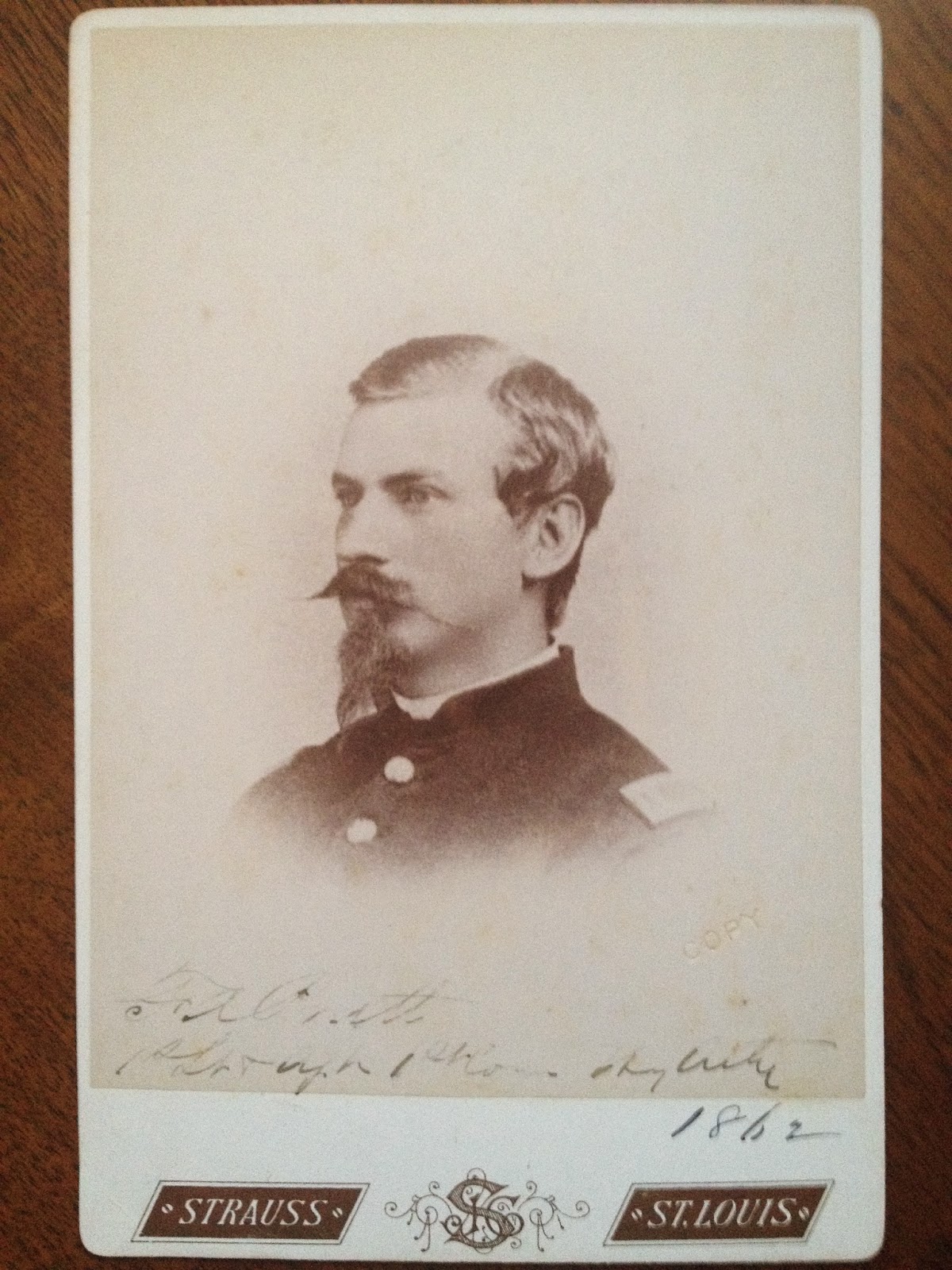
Cabinet Cards

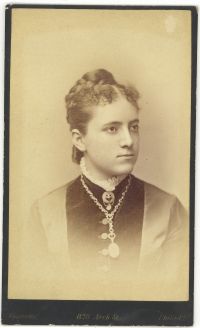
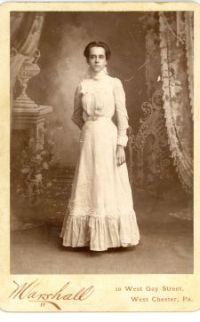
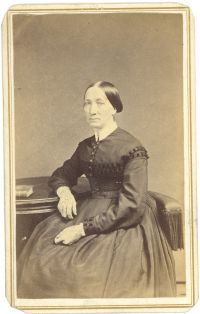
Cabinet Cards were basically a larger version of the earlier Cartes de Visite. Photographs on paper were pasted onto a large stiff backing measuring 6.5 x 4.25 inches. Photographer logos can be found on the front or verso and were often very elaborate. Around 1880 the cards became more elaborate, sometimes having gold or silver edges. At this time the colour of the cards began to change to darker tones and black, burgundy and deep green became popular.

Examples of Cabinet Cards 

 
1877 Cabinet Card
 1882 Cabinet Card

 
1900 Cabinet Card

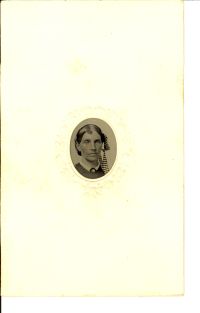
1890s Cabinet Card


Learn More

Watch my video on Five Types of Early 19th Century Photographs

Read more about Cabinet Cards on Lost Faces website

March 6, 2018

Don't Miss My New Website Lost Faces!

Sarah (Page) Simpson 1840-1920
When I was about 11 years old, my grandmother gave me this photo of her grandmother (my great-great-grandmother), Sarah Simpson. Grandma told me it was taken in Ramsgate England sometime in the 1890s.

I was fascinated - she wore such a beautiful ornate hair piece! The gorgeous blouse or dress thrilled me with its ruffles and high collar. I couldn't stop thinking about the fact that I had part of this fine lady in me, in my blood and my genes.

I learned a lot about Sarah - widowed at the young age of 34, and pregnant with her 5th child, she was forced to work as a charwoman to feed her children. 

Not only did that spur me on to delving deeper into my British side of my family, it also sparked an immediate love of antique photos of ancestors. I thought about their lives - were they happy? Did they enjoy the same things I enjoyed? Did they get angry, or cry at the loss of a family pet. Yes those are the odd things I thought about as a youngster.

This early fascination with ancestors and photographs that captured one brief moment in their lives led to my determination to rescue and preserve as many old photos as possible. Several years ago I began purchasing entire albums of named photographs (Cartes de Visite and tintypes mostly) from the Civil War era, and offering scans of the photos to interested descendants. My dream was to one day publish them all online for genealogists to freely copy for their own personal use.

A few of my rescued Ambrotypes & Daguerreotypes
I am excited to announce my dream has come to fruition. Several years ago I was able to purchase the domain name "Lost Faces" from a woman who no longer wanted it.

This year I completed scanning and uploading approximately half of the precious albums I have rescued over the years. Every album is online with a description, a list of names, and at least a few photos from the album.

 There are 81 albums online at this point, and approximately half are complete, meaning all the photos in the albums are online for visitors to enjoy. Most albums have 50 photographs so you can see that is a lot of photos for visitors to enjoy and hopefully find an ancestor or two!

1916 Ramsgate England
As well as these wonderful album photographic treasures, Lost Faces contains dozens of single photos of groups - sports teams, class photos, and more. I also have vintage postcards for your enjoyment, and explanations of various early photograph types such as Cartes de Visite, Cabinet Cards, Tintypes, Ambrotypes, and Daguerreotypes. To top it all off I've added some brief tutorials on dating photographs through fashion, hairstyles, photographer marks and more.

Enjoy your visit to Lost Faces and feel free to download any photos for your own personal use. The only thing you cannot do is publish the photos anywhere else offline or online. Perhaps you'll find an ancestor in my rescues!

June 7, 2016

Death Photography From the 19th Century

This story, and photos, may be upsetting for some of my readers. But it shows very well how times and customs change over the centuries and over the culture of the geographic location.

In the 19th Century it was a common practice in many countries, including England and the United States, to photograph a deceased loved one. Often the family member who had died was placed with the rest of the family for one final family photograph. Children especially were often memorialized in this fashion.

Taken from life: The unsettling art of death photography is a fascinating look at this custom from BBC News journalist .

Photo credit: Screenshot from BBC News article at http://www.bbc.com/news/uk-england-36389581

May 8, 2015

Who Doesn't Love Gone With the Wind Style Dresses?

Here is one of my favorite photos from my collection of Civil War era CDVs (Cartes de Visite)
Mrs. Joseph Curtis taken 1862

Mrs. Joseph Curtis is wearing a typical gown of the early 1860s. Full Pagoda sleeves dropped from the shoulder, with an undersleeve, create the illusion of the sought after tiny waist. Her bodice has a natural waistline and removable collar. Her hair follows the typical hair fashion of this early period. It covers her ears and is parted in the middle and pulled back to a roll at the nape of her neck. The extreme fullness of her skirt is very apparent in this photo.

This beautiful album is one of my rescued treasures. You can view the thumbnails of other photos from the album in my Lost Faces section of my Olive Tree Genealogy website.

Surnames in the album are Fobes, Tucker, Curtis, Gilbert, Peabody, Spear, Blake, Mansfield, Bassett, Botton, Williston, Nilliston, Kimbal, Daniels, Sutherland, Schaffner, Keith, Towne, Low, Wilder, Holden, Whitemore

Locations of photographers: Massachusetts, New York, Illinois

January 26, 2015

Bridgeport Connecticut Photos Rescued

Recently I purchased 35 loose Cabinet Cards and CDVs (Cartes de Visite) that had been removed from an old photo album and were up for sale. Every photo except one was clearly identified and I had a bit of fun yesterday scanning the photos and researching the family.

 This is one of the photos. It's a really lovely photograph of two children, almost certainly brother and sister. They are labelled in period handwriting "Edmon & Fannie". This is the only identified photo that does not include a surname.

Because little Edmon is wearing a dress, we know he is a toddler and not toilet-trained, so probably around 2 years of age. 

The photo is a CDV with rounded corners and this can help date it. Rounded corners on CDVs did not begin until 1872.

Studying the photographer's mark on the verso of this CDV and finding out when M. Smith was in business, as well as studying the clothing styles, children's hair and other clues would allow this photo to be dated with some precision.

From my research yesterday it appears the photos may all connected through family relationships. For example there are 5 photos of brothers and sisters of the Williams family of Bridgeport Connecticut. This became evident as I searched census records on Ancestry.com . I believe, but have not yet proven. that 2 other Williams photos are of wives of two of the brothers.

The Williams family consisted of Benjamin Williams and his wife Elizabeth Goss. Benjamin was born in Maine and Elizabeth in New Brunswick Canada. All the children were born in New Brunswick. The photos I have are of the siblings Simeon, Orlo, Hartley, Eva and Samuel. 

There are photos of the Deniger family, also of Bridgeport. Joseph Henry Deniger and his sister Gertrude are two that I have found so far. Interestingly, their father Joseph Deniger Sr. was born in Canada and their mother Harriet was a Chatfield before her marriage. In the group of photos is one labelled "Uncle Lew Chatfield" and I found 21 year old Lewis Chatfield living with Joseph Deniger Sr in 1860 in Bridgeport.

I hope to have these lovely photos scanned, researched and online on Lost Faces soon. Meantime here is a list of the surnames written on the photos:

Williams, Jackson, Henderson, Morgan, Wells, Deniger, Night, Curtis, Dumbull, Marley, Carpenter, Ferry, Chatfield, Rider, Bowen, Smith, Diott, Polk

Locations of photographic studios were: New York, Bridgeport Conneticut, Danbury Connecticut, Boston Massachusetts, Norwalk Connecticut, Kingston Ontario, Gananoque Ontario, Davis New York, Poughkeepsie New York, Chicago Illinois, Detroit Michigan, and Lynn (Massachusetts?)

Sixteen of the photos were taken in Bridgeport Connecticut.

December 8, 2014

Identifying Photographs Part 4

The following article was originally written by Lorine McGinnis Schulze and published on Olive Tree Genealogy at http://www.olivetreegenealogy.com/photos/photo-types.shtml

It may not be reproduced in any way without my written consent. 

Cabinet Cards (circa 1870)

CDV’s were eventually replaced in the 1870s by the larger Cabinet Cards which used the same photographic process but were on a larger 4 by 6" card.
cabinet card 1877Cabinet Card 1877
Cabinet Card 1882Cabinet Card 1882
Cabinet Card 1900Cabinet Card circa 1900


November 29, 2014

Identifyiing Old Photographs Part 3

The following article was originally written by Lorine McGinnis Schulze and published on Olive Tree Genealogy at http://www.olivetreegenealogy.com/photos/photo-types.shtml

It may not be reproduced in any way without my written consent.

Carte de Visite or CDVs (ca 1859)

CDV stands for carte de visite, a photographic calling card. The CDV process, which began in France in 1854, involved a special camera that produced eight poses on one negative. The CDV quickly replaced the old glass images of the ambrotypes, producing a card the size of the then standard calling card, around 2.5 by 4".

The CDV’s albumen process produced a negative from which any number of prints could be made - and on early CDVs it was important for the photographer to note that more prints were always available.

CDVs arrived in the United States around 1859, on the eve of the Civil War (1861-1865) during which demand skyrocketed as soldiers and their loved ones sought an affordable image remembrance. Many people began collecting portraits of political figures, actors and actresses, Civil War generals, as well as family and friends. Special photo albums were designed especially for cartes-de-visite.

In the United States, the carte-de-visite played second fiddle to cheaper variations on the daguerreotype theme. Thus the early CDVs are rather uncommon. CDV with square corners ca 1872CDV with square corners pre 1872  Example of CDV with rounded corners Civil War Era - Jemima Van SlykeCDV with rounded corners after 1872. Jemima Van Slyke< CDV with corners cut to fit album. You must use fashion clues, revenue stamps or photographer logo or name to date the photograph 

Next  I will talk about  Cabinet Cards. Also see my YouTube Video Five Types of Early 19th Century Photographs 

November 24, 2014

Identifying Photographs Part 2

The following article was originally written by Lorine McGinnis Schulze and published on Olive Tree Genealogy at http://www.olivetreegenealogy.com/photos/photo-types.shtml

It may not be reproduced in any way without my written consent.

Tintypes (circa 1855)

The Ferrotype process (tintypes) was introduced in the United States in 1855. It substituted an iron plate for glass and was even cheaper than the ambrotype. Because tintypes were placed in albums along with CDVs, they were often trimmed at the sides and corners. Tintypes were produced in various sizes
  • Full plate 6 1/2" x 8 1/2"
  • Half plate 4 1/2" x 51/2"
  • 1/4 plate 3 1/8" x 4 1/8"
  • 1/6 plate 2 1/2" x 3 1/2"
  • 1/9 plate 2" x 2 ½"
  • Gem approximately 1/2" x 1" 
Example of Gem tintype in Oval Matte ca 1860sGem tintype ca 1860s. A Gem tintype could be 3/4" to 1" wide. Carte de visite sized card mounts (2½"x4") enclosed the gem and the finished item was known as a carte de visite tintype or ferrotype
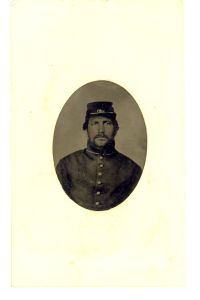
photo-tintype 1.5x2.5 Civil War Soldier9th plate ( 2 x 2.5) tintype in matte. Civil War Soldier
tintype 2.5x46th plate (2.5 x 3.5) tintype.

Next up I will talk about  Cartes de Visite and Cabinet Cards. Also see my YouTube Video Five Types of Early 19th Century Photographs 


November 17, 2014

Identifying Early Photographs

The following article was originally written by Lorine McGinnis Schulze and published on Olive Tree Genealogy at http://www.olivetreegenealogy.com/photos/photo-types.shtml

It may not be reproduced in any way without my written consent.

Daguerreotypes (ca 1839)

Photography arrived in the United States in 1839 thanks to Samuel F. B. Morse, an American artist and inventor. Morse visited Daguerre in Paris in March 1839 and observed a demonstration of the daguerreotype process. He returned to the United States to spread the news, and by the end of 1839 some larger cities on the East Coast had very successful portrait studios.
daguerreotype 6th plate 1854 Franklin Amos Pratt 6th plate Daguerreotype taken ca 1854

Ambrotypes (circa 1854)

The ambrotype was a glass negative backed with black material, which enabled it to appear as a positive image. Patented in 1854, the ambrotype was made, packaged, and sold in portrait studios as the daguerreotype had been, but at a lower cost. The ambrotype produced a single image on glass.
9th plate Ambrotype ca 1858 9th plate Ambrotype ca 1858
1861 Ambrotype 6th plate Ambrotype 1861
Next up I will talk about Tintypes, Cartes de Visite and Cabinet Cards. Also see my YouTube Video Five Types of Early 19th Century Photographs 

September 19, 2014

Looking For Mable

Several years ago, my husband bought a portrait of a beautiful woman. According to the antique dealer who owned the store,  the painting was done by Mable (or Mabel) Savage and was her self-portrait. Mable was said to be a teacher in Stratford Ontario Canada.

For years we have searched for Mabel to no avail. We do not know if she was a Savage by birth or by marriage. We estimate her date of birth to be ca 1870-1880 and this painting done ca 1890-1900.

Do you recognize Mable?  This is not the original frame. You can see from the shadowing that the portrait was originally in an oval frame that was not with the portrait. My husband bought the portrait loose and chose the mount and frame you see below.


August 23, 2014

Review of Top Hat Photo Repair and a Discount for my Readers

Recently a photo restoration service called Top Hat Photo Repair offered to restore a photo of my choice in exchange for a review of their services. I have dozens of old photos that need some restoration work so the offer was tempting.

However I my reviews are always honest so I had to warned them that if I didn't like the service they would not get a good review from me. Well I'm pleased to say I am very happy with the work they did! 

Here is the before photo. It's a very dark photo of my grandmother holding my mother ca 1916. 


I love this photo. Clothes on the line, Grandma's pocket bulging with clothespegs and my mom no doubt squirming in her arms. 

Here is the photo after Top Hat Photo Repair was finished restoring it. I can see Grandma's face better and my mom's face is completely visible now. They were very accommodating about doing more on the photo after sending me their first restoration. There were 2 small items I wasn't 100% satisfied with in the first attempt but I love the final product below.
Review of Top Hat Photo Repair and a Discount for my Readers
Michael, of Top Hat Photo Repair has offered my readers a discount of 20% on photo restoration. Just use the promo code "olive"  This discount is good until September 15, 2014. Their prices are very reasonable and I hope some of my readers will be able to take advantage of this offer.

April 14, 2014

Civil War Photos Found in Vermont Attic

Civil War Photos Found in Vermont Attic
Representation of a Civil War photo
This is a fascinating story of an amazing find in an attic. Hundreds of photos from the Civil War were found in a house belonging to one of the descendants of Alfred Waud, the Civil War artist.

They were purchased by one man who carefully inventoried each photograph and stored them in archival sleeves. In the end the collection consisted of over 500 albumen prints from the Civil War and the American west.

Read the story at My Photo Archiving Find Of A Lifetime How I Found Hundreds Of Civil War And Old West Photos In An Attic In Vermont

September 26, 2013

Submit Your Photos to Ask the Photo Detective

Submit Your Photos to Ask the Photo Detective
Readers may be interested in participating in knowing that Photo Detective Jayne Shrimpton analyzes two user-submitted photos every month. 

If you’d like to send your photo to Jayne, please register - See more at: http://blog.findmypast.co.uk/category/ask-the-photo-expert/#sthash.0TtVzZct.dpuf
To submit a photo you must register with FindMyPast but there is no charge for registration or the photo analysis.

For more details see Ask the Photo Expert