Discover your inside story with AncestryDNA®
Showing posts with label Revolutionary War. Show all posts

February 10, 2020

Bones found in home renovation may be Revolutionary soldiers

Human skeletal remains possibly belonging to Revolutionary War soldiers have been discovered under an 18th-century house being renovated in Danbury Connecticut.

Three skeletons have been discovered of adult males lying in an east-west orientation, and several Revolutionary War buttons were found nearby.

The town is the site of the Battle of Ridgefield in April 1777.

Continue reading 


Photo credit: By Bernard Romans; User:Magicpiano - This map is available from the United States Library of Congress's Geography & Map Division under the digital ID g3780.ar102300.This tag does not indicate the copyright status of the attached work. A normal copyright tag is still required. See Commons:Licensing for more information., CC BY-SA 4.0, https://commons.wikimedia.org/w/index.php?curid=10604648

May 17, 2019

Finding a Loyalist Ancestor

A Loyalist is any person who is loyal to their allegiance (especially in times of revolt). During the American Revolution in what was to become the United States of America, a Loyalist (also called UEL - United Empire Loyalist) was anyone who remained loyal to the King of England. They were called Tories in their own country but Loyalists elsewhere. Most fled to Canada and helped settle that country, particularly Ontario and Nova Scotia.


Guide to Finding a Loyalist Ancestor in Upper Canada (Ontario) is available in paperback or as an e-book on Amazon.com and on Amazon.ca
Other Loyalist genealogy records you will want to consult are Loyalist Muster Rolls for Butler's Rangers; Sir John Johnston's [Johnstone's] Brigade; King's Royal Regiment of New York (KRRNY); Men From the Turloch Militia who Joined KRRNY or Butler's Rangers; 1778 List of Men From Pennsylvania who joined the British Army & British Regiments who served in North America during the French and Indian Wars.

To find Loyalist ancestors, start with Loyalist History. This will help you understand what a Loyalist was, who they were, what Military Loyalist Regiments for British and Loyalist troops during the American Revolution, and where they settled. Butler's Rangers, mustered by Col. John Butler in New York and consisting of Mohawk Indians and men from New York is one of the Regiments featured. 

You can also read about other Loyalist families:

Isaac Van Valkenburg aka Vollick Loyalist from New York with Butler's Rangers in Niagara 

Jonas Larroway Loyalist from New York with Butler's Rangers in Niagara 


Shainholdts- A Loyalist in Butler's Rangers 


Elisha Wilcox (Willcox, Willcocks) Sr Loyalist from New England with Butler's Rangers in Niagara, and his children Asa Wilcox, Hezekiah Wilcox, Elisha Wilcox Jr, Sarah Wilcox Emmons, James Wilcox, also his son's father in law Gasper Brown 


April 24, 2019

Revolutionary War Graves Lost and Found

Bones from as many as 11 unmarked graves have been found so far in an empty lot in the Adirondack village of Lake George, 55 miles north of Albany.

Two uniform buttons found appear to be from a Pennsylvania soldier in the 1st Pennsylvania Battalion. It is quite possible that the 11 soldiers died of smallpox at St. George.

Soldiers who went north to fight in Canada in 1776 were sent upon by a smallpox breakout, and were sent back to St. George to recover if they fell ill.

If you had ancestors from Pennsylvania who fought in the Revolutionary War, you might want to Google for more articles as archeologists uncover more details.

March 1, 2017

Finding a Revolutionary War Soldier in 1840 US Census

A Facebook friend posted a link to a blog post explaining how to find the names of those who were receiving Revolutionary War and other service pensions using the 1840 US Census. The lists provide the name and age of the pensioner and also name the head-of-household in which the individual was residing.

This is a very valuable research tool and one I was not aware of. 


Check out My Kith 'n Kin's blog post The Secret Hiding on the 1840 U.S. Census for full details and examples on how to access this information.

Image: 1840 US Census from Ancestry.com shows Clark, Georgia shows Benjamin Parr of Georgia as a Revolutionary War Soldier  

September 3, 2016

Meme: Immigrant Ancestor Jonas Larroway, a Loyalist

1797 Certification of Jonas Larroway's Service in Butler's Rangers
There is a lot of discussion about immigration in America right now. Tempers have flared, and different groups hold various strong opinions. There is also Brexit, where immigration was a large focus of the recent vote which resulted in the U.K. leaving the E.U.

I've been following this for several months and it occurs to me that those of us in Canada, America, and Australia have immigrant ancestors. Have you researched yours? Do you know who they were, why they came to your country and when? Do you know how they fared once settled in their new land? Were they welcomed? Were they shunned? Was their discrimination based on their religion or ethnic origin? These are all questions that are important, and interesting to discover. With that in mind, I'm the dedicating Saturdays (as many as needed) as the day to join me in discussing your immigrant ancestors.

You will be able to read any you are interested in by using the keyword Immigrant Ancestors. I'm going to share each week what I know of my immigrant ancestors to North America (whether that is USA or Canada)

Jonas Larroway, United Empire Loyalist, born 1731 Schoharie Co. New York, was descended from the LeRoy dit Audy family who settled in New France (now Quebec) from France in 1668. His great-grandfather, Simeon LeRoy dit Audy was born in Creances Normandy. Simeon settled first in Quebec, Canada in October 1668 where he married a Filles du Roi named Claude (Blandina) Deschalets, an orphan who was sent to New France with her two sisters to be married to a suitable French settler.

The LeRoy surname underwent great changes, becoming LeRoy dit Audy or Ody in New France, and Laraway or LeRoy in the United States. Jonas was my 5th great-grandfather and he married in 1754 in Schoharie New York, Elizabeth (Betsy) Muller, daughter of Johannes Nicholas Muller and Maria Dorothea Wuest, a Palatine line.

Jonas fought in Butler's Rangers during the American Revolution and settled at Niagara, Ontario in 1783.

Jonas, along with other Loyalists, suffered greatly for what he believed in. He had to flee his home in New York to remain loyal to the King of England. 

April 19, 2016

It's Here! The Peer Family in N. America V. 5 Stephen Peer & Lydia Skinner


Announcing the following book:
The Peer Family in North America:V. 5 Stephen Peer & His Wife Lydia Skinner and their Descendants to 3 Generations

List Price: $29.99
8.5" x 11" (21.59 x 27.94 cm) 
Full Color on White paper
80 pages
Olive Tree Genealogy


Available on Amazon.com or Amazon.ca or Createspace

See all Lorine's genealogy books available on Amazon.com and Amazon.ca


The Peer family, loyal to the British Crown, suffered from persecution in New Jersey throughout the American Revolution. Stephen Peer was born circa 1780 in New Jersey to Jacob & Anna Peer. 

His father left New Jersey for Upper Canada (present day Ontario) in the summer of 1796. Stephen married Lydia Skinner, the daughter of the Loyalist Haggai Skinner & his wife Elizabeth Westbrook. Stephen was killed at the Battle of Chippewa during the War of 1812. 

This book discusses the life of Stephen, his wife, and their children and grandchildren in those early years. Descendants will enjoy seeing early documents such as land petitions, family photographs, newspaper clippings, and wills.


Available on Amazon.com or Amazon.ca or Createspace


Note that Volumes 1 - 6 are published and can be purchased on these sites:

Lorine's Books on Amazon.com | Lorine's Books on Amazon.ca | CreateSpace Store

April 15, 2016

Peer Family in N America V 6 Jacob Peer & Lucy Powers


The Peer Family in North America: V. 6 Jacob Peer Jr. & His Wife Lucy Powers and their Descendants to 2 Generations
 
Authored by Lorine McGinnis Schulze

List Price: $45.99
8.5" x 11" (21.59 x 27.94 cm)
Full Color on White paper
152 pages
Olive Tree Genealogy


Available on Amazon.com or CreateSpace or Amazon.ca

The Peer family, loyal to the British Crown, suffered from persecution in New Jersey throughout the American Revolution. Jacob Peer Jr. and his wife Lucy Powers settled in the wilderness of Upper Canada (present day Ontario) after the American Revolution.

After suffering losses during the War of 1812, they left Ontario for Michigan in 1821. This book discusses the lives of Jacob, his wife, and their children in those early years. Descendants will enjoy seeing early documents such as land petitions, family photographs, probate records and wills.

Note that Volumes 1 - 6 are published and can be purchased on these sites:

Lorine's Books on Amazon.com | Lorine's Books on Amazon.ca | CreateSpace Store

April 13, 2016

It's Ready! V. 4 Peer Family in N America - Philip Peer & His Wives


The Peer Family in North America:V.4 Philip Peer & his two Wives Ester Dunn and Susan Griniaus and their Descendants to 3 Generations

Authored by Lorine McGinnis Schulze

List Price: $39.99
8.5" x 11" (21.59 x 27.94 cm) 
Full Color on White paper
102 pages
Olive Tree Genealogy

See all Lorine's genealogy books available on Amazon.com and Amazon.ca
 

The Peer family, loyal to the British Crown, suffered from persecution in New Jersey throughout the American Revolution. 

Philip Peer and his family left Sussex County New Jersey for Upper Canada in the summer of 1796. After his first wife Ester Dunn died Philip married Susan Griniaus. 

This book discusses the lives of Philip, his two wives, and their children and grandchildren in those early years. Descendants will enjoy seeing early documents such as land petitions, family photographs, newspaper clippings, and wills.

Available on Amazon.com or CreateSpace or Amazon.ca


Note that Volumes 1 - 6 are published and can be purchased on these sites:

Lorine's Books on Amazon.com | Lorine's Books on Amazon.ca | CreateSpace Store

April 8, 2016

Who Do You Think You Are? Featuring Scott Foley

Be sure to watch this Sunday’s episode of Who Do You Think You Are? featuring actor Scott Foley.  

The two-time Emmy nominated series WHO DO YOU THINK YOU ARE? returns this spring to follow more of today’s most beloved and iconic celebrities as they embark on personal journeys of self-discovery to trace their family trees.
 
Ancestry.com, the leading family history company, is teaming up again with TLC as a sponsor of the upcoming season. As part of the show sponsorship, Ancestry provides exhaustive family history research on each of the featured celebrities to help make discoveries possible and build out the story of each episode.

The series is produced for TLC by Shed Media and Is or Isn’t Entertainment, and is based on an original format created by Wall to Wall Media and Alex Graham. More information can be found at TLC.com/WDYTYA. ‘Like’ Who Do You Think You Are? on Facebook.com/WDYTYA and follow @WDYTYA on Twitter.

Scott Foley is deeply patriotic but doesn’t know anything about his American roots. He sets out to investigate family lore about a Revolutionary War hero and to his surprise, discovers an ancestor who put his life on the line for George Washington. Digging deeper, Scott then uncovers the shocking tale of a relative who was entangled in the Salem Witch Trials! 

Image credit: TLC

April 4, 2016

Good News - 4 More Peer Genealogy Books Coming Soon

Exciting news! My series of volumes for the Peer Family in North America is almost complete. FOUR volumes (V. 2, 3, 4 and 5) are due for publication this week.

As many of my Peer "cousins" know, I previously published Volume 1 on Jacob and Anne Peer, the ancestors who settled in Upper Canada from New Jersey shortly after the American Revolution. 

The Peer family were loyal to the British Crown, and suffered from persecution in New Jersey throughout the American Revolution. Jacob and his family left Sussex County New Jersey for Upper Canada in the summer of 1796. Four of Jacob’s sons – Jacob Jr., Edward, John and Philip Peer petitioned for land one year later. They settled in the Hamilton area of what was then the wilderness of Upper Canada. Sons Levi and Stephen did not submit petitions for land.
 
Some of the sons of Jacob left Upper Canada at that time and returned to the United States with their families, settling in Michigan, Pennsylvania, New York and Illinois. Some remained in Ontario. 

Descendants will enjoy seeing early documents such as land petitions, family photographs, newspaper clippings, letters, and wills.

Volume 1 is available directly from me:

The Peer Family in North America. V1 Jacob & Anne Peer, Immigrants from New Jersey to Upper Canada in 1796. A study of the first two generations. Coil bound 8.5x11. 108 p. 
Download an Order Form to pay by check or pay using Paypal

The much-anticipated Volumes for Jacob and Anne's sons Levi, Edward, Philip and Stephen are completed and are scheduled for publication this week. That's right - this week Peer descendants in North America will be able to order these books to learn more about their ancestors.


V.2 Levi Peer 8.5x11 - 108 pages
V.3 Edward Peer 8.5x11 - 70 pages
V.4 Philip Peer 8.5x11 - 104 pages
V.5 Stephen Peer 8.5x11 - 79 pages


For those descendants wondering where the volumes are for Jacob Jr. or daughters Phoebe and Marcy, those are in the works. As soon as the 4 new volumes are ready for purchase there will be a notice posted here on Olive Tree Genealogy blog.


March 18, 2016

Civil War & Revolutionary Soldiers' Graves Dug Up and Spilled

Anger as remains of soldiers from Revolutionary and Civil war are dug up and their spilled throughout historic cemetery 

The historical cemetery dating back to 1758 holds graves of veterans from the Revolutionary War, Civil War and World World I 
Among those dug up was the grave of 14-month Emma Jane McElmurray who was buried in 1884 [By Daily Mail Reporter]
Read more: http://www.dailymail.co.uk/news/article-2311453/Outrage-graves-belonging-U-S-soldiers-child-dug-spilled-Georgia-cemetery.html#ixzz43I2Qwulw

June 30, 2015

It's Not Just Loyalists! (A Misleading Title on Ancestry)

Recently I poked around a database record set on Ancestry.com. The title is UK, American Loyalist Claims 1776-1835. In the description given by Ancestry we read that "Records in this database relate to Loyalist claims and cases heard by the American Loyalist Claims Commission."

There is more detail given in the description but every sentence stresses that this database provides names and details of Loyalists, those who fled the Colonies during and after the Revolutionary War 1775-1783. However this is incorrect! Badly incorrect.

The records are divided into Series I (AO12) and Series II (AO13). 


Yes there are some Loyalist claims and documents in this set of records. But a very quick look in Series II (AO 13) reveals that in the section titled "American-Loyalist Claims Series II (140) Miscellaneous 1801-1835", we find Claims for Losses in Upper Canada after the War of 1812. 

These claims for losses were not filed by Loyalists but by ordinary citizens who suffered at the hands of the Americans or the Indians during that War. This specific (and valuable!) list of those filing claims is dated May 1824 and begins on image 15 of 228. It ends on image 49 at claimant number 2054.

It's an invaluable database but sadly not many researchers will find it since it is not listed correctly on Ancestry.com. And for those who do stumble on it by searching and finding an ancestor's name, they are almost certain to think that finding that name in this database means that their ancestor was a Loyalist. 

Please don't be fooled. When searching a large database, be sure to scroll back to the start of the specific section your ancestor's name is on. Look for the title of that specific set of records so that you know what you have found and can provide an accurate and correct source for the information.


March 21, 2015

Almost Time for Who Do You Think You Are? With Angie Harmon

Angie Harmon sets out to discover the roots of her beloved father, whose heritage is relatively vague, on Who Do You Think You Are?, airing this Sunday, March 22 at 10/9c on TLC.

On her journey, Angie uncovers the dramatic story of her 5X great grandfather, who endured hardship and danger as an immigrant coming to America. She discovers that he fought in the American Revolution and risked death for standing his ground. She makes modern connections with some of her own values that appear to have been in the family for generations.

Key details discovered in Angie’s episode include:

·         Angie traces all the way up to her 5x great grandfather Michael Harmon. She discovers that Michael was the first immigrant ancestor on the Harmon side, and to her surprise, from Germany.

·         Angie discovers Michael Harmon gave up his freedom to come to America, fought for his new country’s independence, and risked everything at a pivotal point in America’s history.

·         Angie finds out that Michael Harmon as an indentured servant once arriving in the US.

·         Michael Harmon was released from servitude right in the middle of the Revolutionary War, and enlisted with the 4th Pennsylvania Regiment on May 10, 1777.

·         Angie discovers that Michael Harmon camped at Valley Forge under the command of George Washington.

·         However, Michael and his entire Pennsylvania line mutinied due to horrible conditions. Eventually the U.S. army met their terms, and the soldiers were able to leave service if they chose – Michael’s war service ended after the mutiny.

·         Michael owned multiple plantations and finally got married and had 7 children, perhaps starting the tradition of big Harmon families.

·         Angie finds her ancestors land on an old map, and heads out to see her ancestral land.


Image Credit: TLC

December 14, 2014

Paul Revere's 1795 Time Capsule Found

Workers investigating a water leak in the Massachusetts State House in Boston, were surprised to stumble on a time capsule buried in 1795 by Paul Revere and Samuel Adams.

Paul Revere's 1795 Time Capsule Found
Hatchford holds Time Capsule Box
Pamela Hatchfield, the head of object conservation at Boston's Museum of Fine Arts, was called in to carefully chip away the plaster around the small box so it could be removed.

Staff will be X-raying the box and studying it before deciding what the next step will be. They hope to open it safely and do whatever is necessary to preserve the contents. The contents are not known although there is some evidence indicating there might be coins, a plate and a plaque inside.

Historians know that the box was opened in 1855 and the contents treated with acid so there is concern that there could be deterioration. Once the contents are examined and treated, the decision will be made as to what the box's future will be.

Credit: Still shot from video online at http://www.cnn.com/2014/12/11/us/boston-time-capsule-paul-revere-sam-adams/index.html?c=us

October 8, 2014

Warning! Opinion re Ken Burns Remarks on Finding Your Roots

Watching Finding Your Roots last night (I love this series) I was quite taken aback by Ken Burns comment that he was "more ashamed" of finding out he had a Loyalist ancestor  then he was of having a slave owner ancestor. 

Wow. What a terrible thing to say! Both sides - Patriot and Loyalist  (please don't call them Tories!) stood up for what they believed in and fought for those beliefs. It does not matter whether or not we agree with one side or the other, both sides should be respected and honoured for their strength and courage in holding firm to what they believed in. 

My Loyalist ancestors believed it was treason to rise up against the King. They suffered greatly both in their physical ways and financially with the loss of property. They were forced to flee the country they were born in to make a new life in Canada. Loyalists were responsible for opening Ontario and other provinces in Canada for settlement. They are as important to our history of our country as Patriots are to our American friends and cousins. 

Patriots likewise showed great courage in taking  a huge chance that they would win the fight. That took courage. They too suffered during the war. Both sides suffered atrocities at the hands of the opposing side. That's the nature of war. 

My own Loyalist ancestor was imprisoned and his wife and 10 young children taken from their home in northern New York, set the home on fire, and marched the family into the forest where they were left to die. Luckily Indians from Montreal found them and led them to Quebec where they were taken in by the British government as refugees. But do I bear a grudge against Patriots? NO! Why would I? Each side did what they felt was necessary.  There is not, nor should there be, any judgement on my part. Terrible things happened to individuals on both sides of the American Revolution.

I wish Ken Burns had shown a modicum of respect for the difficult choices his Loyalist ancestor made. I do not expect him to make the man his hero, but how about less judgement and less disdain for the Loyalist cause. His remarks left a very bad taste in my mouth.


June 21, 2014

10 Ways to Find a Loyalist Ancestor

How to Find a Loyalist Ancestor
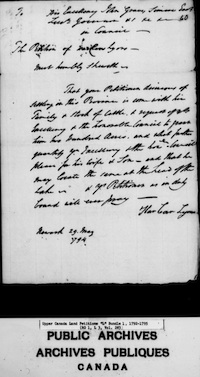
Petition of Harcor Lyons Loyalist
Source Upper Canada Land Petitions

What is a Loyalist?

A Loyalist is any person who is loyal to their allegiance (especially in times of revolt). During the American Revolution in what was to become the United States of America, a Loyalist (also called UEL - United Empire Loyalist) was anyone who remained loyal to the King of England. They were called Tories in their own country but Loyalists elsewhere. Most fled to Canada and helped settle that country, particularly Ontario and Nova Scotia

One of the best genealogy resources to find Loyalist ancestors in Ontario are the Upper Canada Land Petitions. Find out how the OIC (Orders in Council) for Loyalists can help you in your search

Tips for Finding a Loyalist Ancestor

1.Check the index to Upper Canada Land Petitions (UCLP) The land petitions often contain invaluable genealogical information including children's or father's names, spouse's names, places of origin, reports of the hardships they endured as Loyalists, Loyalist unit served in, and sometimes ages. The UCLP is available online as a searchable database 

For help finding the actual certificates and petitions in the online films, see Searching Ontario Canada Land Records, eh? and Understanding Notations on the Envelope of an Upper Canada Land Petition
 
2. Check Land Books 1793-1826

For Upper Canada Land Books see Finding an Ancestor in the Challenging Upper Canada Land Books This is a step by step tutorial showing researchers how to use the index entries and details to find the Land Book entry online. 

3. Check Loyalist Claims and Conversion List [NA MG14] 1790-1837 - Audit Office 12 and 13 compensation cliams for land and goods lost during the American Revolution - 178 reels of microfilm. Not all Loyalists filed claims. Many did and if your ancestor is among those who did, you won't want to overlook this. 

4. Search the Heir & Devisee Commission records.

 5. Search the Upper Canada Sundries. For help see 12 Months of Finding Ancestors: Upper Canada Sundries (Part 3 of a 12 Part Series) 

6. Check Reid, W.D. Loyalists in Ontario: The Sons and Daughters of the American Loyalists of Upper Canada 

7. Check the The Old United Empire Loyalists List - available in book form; and as microfilm -- United Empire Loyalist Lists [NA RG 1, L7 Vol 52a] on C-2222 from the Ontario Archives 

8. Check District Loyalist Rolls - transcript on MS803 at the Ontario Archives. Update: Brenda Dougall Merriman informs me that these were published: District Loyalist Rolls transcribed by Keith Fitzgerald (AO, MS 803)were published as his *Ontario People: 1796-1803* by the Ontario Genealogical Society. Brenda did a series on Loyalists and wrote the book called UEL: Finding Your Loyalist Ancestors in Upper Canada.

9. Check United Empire Loyalist Lists [NA RG 1, L7 vol 52a] on C-2222 from the Ontario Archives but be aware that no one list is complete! There were several versions of the lists drawn up and not finding an ancestor's name does not mean he was not a Loyalist.

10. An often overlooked source of information is The Haldimand Papers - papers and correspondence of Haldimand, Sir Frederick from 1758-1784. Available as 115 reels of microfilm from the NAC or as selected records on 50 reels of microfilm from the Ontario Archives. Muster rolls can be found on the H.P. in the National Archives of Canada as MG 21 These Loyalist volumes, and the nominal index to them, are available on microfilm reel C-1475. Avaiable on ILL (InterLibraryLoan)

April 9, 2011

Finding Details About the Loyalist in Your Ancestry (Part 1)

When the American Revolution (Revolutionary War) began in 1775, individuals living in the 13 British colonies had to decide whether to remain loyal to the British King or to fight for independence. Loyalist is the term used to describe those who supported the King and who later fled to Canada with their families. You may sometimes see Loyalists  referred to as Tories but this is not the commonly accepted term.

Lands Confiscated

Loyalists were harassed socially and politically. Many were expelled from their land and their property was seized. Many were arrested. One Loyalist ancestor living near North River, New York was arrested and in 1779 his home was burned to the ground forcing his family to flee to Montreal Canada. My Loyalist ancestor from New Jersey did not take up arms  but remained sympathetic to the British forces and according to official documents 
"[he] suffered greatly both in his person and property in the Late War between Great Britain and America"
Fleeing to Canada

The first trickle of Loyalists into Canada was in March 1776 when 1 000 people fled Boston and accompanied the British Army as it retreated before the American forces. In 1782 when the Revolution ended, Canada consisted of two colonies: Quebec and Nova Scotia. Approximately 10,000 Loyalists went to Quebec, the rest to Nova Scotia. 

Quebec Settlements

Those who settled in Quebec ran into problems with the French feudal system of land ownership and agitated for the creation of an English-speaking province. As a result, the Quebec colony was divided into Upper and Lower Canada in 1791. Loyalists came overland to the Niagara Peninsula in the new area of Upper Canada. 

Ontario Settlements

Although there were exceptions, Loyalist settlement in 1784 in what is now the Province of  Ontario  was mostly by discharged servicemen from Ranger Units who settled in roughly the following pattern, going from east to west along the St. Lawrence River and Lake Ontario:

   > Lancaster Township: Royal Yorkers settled there in 1785
   > Charlottenburgh Township: Roman Catholic Highlanders in the Royal Yorkers
   > Cornwall Township: Scottish Presbyterians in the Royal Yorkers
   > Osnabruck Township: German Calvinists in the Royal Yorkers
   > Williamsburgh Township: German Lutherans in the Royal Yorkers
   > Matilda Township: Anglicans in the Royal Yorkers
   > Edwardsburgh, Augusta and Elizabethtown Townships: Major Jessup's Loyal Rangers
   > Kingston Township: Captain Michael Grass and his New York Loyalists
   > Ernestown Township: Jessup's Rangers
   > Fredericksburgh Township: Major James Rogers' Co. of the King's Rangers and the 2nd Battalion of the Royal Yorkers
   > Adolphustown Township: DeLancey's Corps
   > Marysburgh Township: German mercenaries and disbanded English and Irish troops
   > Sophiasburgh Township: Americans who arrived after the Revolution
   > Ameliasburgh Township: no specific Loyalist units
   > Sidney Township: no specific Loyalist units
   > Niagara Region: Butler's Rangers


I'll discuss Loyalist Land Grants, Land Petitions, Rationing Lists and other available records and information on Loyalists in subsequent blog posts.

May 25, 2008

FInding a Loyalist (Tory) Ancestor in Land Petitions

A Loyalist is any person who is loyal to their allegiance (especially in times of revolt). During the American Revolution in what was to become the United States of America, a Loyalist (also called UEL - United Empire Loyalist) was anyone who remained loyal to the King of England. They were called Tories in their own country but Loyalists elsewhere. Most fled to Canada and helped settle that country, particularly Ontario and Nova Scotia

For free Loyalist data online refer to the Loyalist Genealogy on Olive Tree Genealogy website

Loyalists could petition for, and were granted land as follows:

> 100 acres for head of family plus 50 acres per family member
> 50 acres for single men
> 300 - 1000 acres for army officers
> 200 acres for an NCO plus 200 for wives, if they applied
> 100 acres for a private soldier plus 50 acres for each family member

The Petitions of Loyalists for land, which are found in the Upper Canada Land Petitions on microfilm are not uniform. You may find one small petition, giving just enough facts to persuade the Crown to give that person a free grant as a Loyalist. You may find page after page of affidavits,testimonies, and so on, all documentation to prove the petitioner's claim. For example in my own Loyalist research,one of my Loyalist ancestors' files has an affidavit from a well known judge of the Niagara area, testifying to his Loyalty during the 'troubles' - this document providing his former place of residence in the United States.

Another Loyalist file included a document signed by his commanding officer in Butler's Rangers (providing his unit),describing the petitioner's hardships including being imprisoned 3 times in Albany NY. A second document gave great detail about the petitioner's wife (including the number of children) and her hardships in NY, including a description of the night the "rebels" (Patriots) came to her home in the northern part of NY and burned it to the ground. Thisdocument went on to describe her ordeal as she and her children attempted to make their way north to "Canada".

Don't overlook these petitions as a wonderful source of detail as well as genealogical material. Until you find them you have no way of knowing how much or
how little information may be contained in the file.

For more info on these petitions and how to obtain them on microfilm, see How to Find your Loyalist Ancestor

November 3, 2007

What Genealogy Records Does Footnote Have?

After my announcement yesterday about the special 20% off discount for visitors who go to Footnote.com from OliveTreeGenealogy.com, readers wrote with questions. I goofed in assuming that readers would know exactly what Footnote has!

Footnote has NARA documents that no other site has online. Footnote has Civil War Records including Confederate Soldiers. They have Navy Widows Certificates. They have so much I can't list all the databases here but to start, on Footnote you can search
« Naturalization Documents &
Naturalization Indexes

« Revolutionary War Rolls, 1775-1783

« War of 1812

« Newspapers & Town Records

« Civil War Documents


Another thing I really like about Footnote.com is their Spotlights section. Spotlights are an easy way for visitors to highlight interesting images that you find on Footnote and share them with other people. I see that subscribers to Footnote are starting to Spotlight their own ancestors' records that they find. That's an intriguing way to use the Spotlight feature.

You can also add a Story Page where you become and author, and tell the rest of us something about a topic you find interesting. Free Masonry, Naturalization, Immigration Records, you name it, you can create a Story Page for it.

I hope this helps answer the questions I had about Footnote but there is lots more to discover on the site than what I've listed here

May 15, 2007

Revolutionary War Pension Files To be Released by Footnote.com Teaming with FamilySearch

Today, Footnote.com announced an agreement with FamilySearch, historically known as the Genealogical Society of Utah, a nonprofit organization sponsored by The Church of Jesus Christ of Latter-day Saints. FamilySearch is the world’s largest repository of genealogical information.

This new partnership brings together two organizations that will utilize their combined resources to digitize and make available many large historical collections. The first project will be the three million U.S. Revolutionary War Pension files which will be published for the first time online in their entirety.

The Revolutionary War Pension Files feature original records that include muster rolls, payrolls, strength returns and other miscellaneous personnel pay and supply records of American Army Units from 1775-1783. They provide a wealth of new information for historians and genealogists which they can share with other colleagues and family members.