Discover your inside story with AncestryDNA®

May 16, 2014

An index to Niagara area Loyalists and their Land Certificates

Image 160 Index of names H 1140
Canadiana.Org has digitized 21 films of the Heir & Devisee Commission Papers (Heir & Devisee Commission papers 1797-1854, found in their Heritage Collection), and that's a good thing for genealogists. These records have valuable and informative genealogical documents.

But as mentioned in a previous blog post I wrote called Heir & Devisee Commission 1797-1854 on Canadiana.org - Listing Errors and a Workaround, the index and description of what is in each film, as provided on Canadiana.org,  is incorrect.

I have been slowly going through each film and noting the correct contents in detail. I have begun to publish my full set of corrections for the digitized records on Olive Tree Genealogy website at Heir & Devisee Commission 

Image 174 Jonas Larroway Certificate
While scrolling through  microfilm H 1140 in order to correct Canadiana.org's flawed content description, I came across a set of Land Certificates and other documents from individuals living in what was called Nassau District. Nassau District was known by this name until 1792 and consisted of western Lake Ontario and Niagara areas. Most, if not all, of the men listed were Loyalists. In fact my 5th great grandfather Jonas Larroway is on this list and his Land Certificate is found on images 174 and 175. 

Since the Heir & Devisee Commision records have not been indexed I decided to take the time to copy the names and provide the image number of each claim and the name of the individual. This means that if you spot a name of interest you can go directly to the film (HD 1140) and then directly to the image number for your ancestor. 

I will also be publishing an index to 150 claims by individuals living in the Home District (In 1792 Nassau District was renamed Home District). See History of Ontario  and Districts of Upper Canada in 1846 for a list of the original Districts and information on name and boundary changes.

H 1140 Volume 41 Land Location Certificates 

Image 159 TITLE: Nassau District  land certificates #1-15 1790–1792
Image 160 Index of Claimant names:
  • Bradt, Aaron 1790
  • Brown, Joseph 1791
  • Butler Sheehan, Walter 1790
  • Clench lieut. Rolfe 1792
  • Cunningham, Archibald 1792
  • Fanning, John 1791
  • Fisher, William 1792
  • Haslip, James 1791
  • Larraway, Jonas 1792
  • Lottridge Capt. Robert 1792
  • Lutes, Sampson 1790
  • Murray, Lieutenant Duncan 1791
  • Palmer, Joseph 1791
  • Petri, Joseph 1791
  • Reynolds, Lieutenant Caleb 1792
  • Robison, James 1790
  • Ropp, Andrew 1833
Actual certificates and receipts. Image Numbers and Claimant Names
  • Image 161 Aaron Bradt certificate
  • Image 162-163 Joseph Brown certificate
  • Image 164 Walter Butler Sheehan certificate
  • Image 165-167 lieut. Rolfe clench certificate
  • Image 168-169 John Henry Chrysler, Aaron Young, Philip Young
  • Image 170-171 John Fanning certificate
  • Image 172–173 James Haslip certificate
  • Image 174-175 Jonas Laraway certificate
  • Image 176-179 Capt. Robert Lottridge certificate
  • Image 180-182 Sampson Lutes certificate
  • Image 183-184 lieut. Duncan Murray certificate
  • Image 185-187 Joseph Palmer certificate
  • Image 188-189 Joseph Petri certificate
  • Image 190-195 lieut. Caleb Reynolds certificate
  • Image 196-198 Archibald Cunningham certificate
  • Image 199 William Fisher certificate
  • Image 200 James Robison certificate
  • Image 201-209 Joseph Robison certificate
  • Image 210-211 Andrew Ropp, Jacob Erb 1833
For Olive Tree Genealogy's list of corrected volumes please see Heir & Devisee Commission

May 15, 2014

Your Family Past, Present and Future

Your Family Past, Present and Future
Diamond Theory of Ancestors
I've talked before about the Pyramid vs Diamond Theory of ancestors. If you don't know what I'm talking about, please read What's Your Number? Don't Be Too Shocked if It's Below 30%! and How Many Ancestors Do We Have????

Basically the Diamond Theory explains that we can't keep going back through the generations and doubling the number of ancestors in each generation. (That's the inverted pyramid theory). Why not? Because eventually the world's population will not be large enough to support the numbers! 

In the Diamond Theory we see that as you keep going back through the generations you will eventually find cousins marrying cousins which narrows the number of unique ancestors and results in a diamond shape rather than a pyramid. 

One probability model created by a demographer for genealogists, is that a child born in 1947 in England tracing back to 1492 would have 60,000 ancestors. Going back further to 1215, this child would find that 80% of the entire population of England at that time would be on his or her family tree! So anyone living in present-day England who traces his/her lineage back through English history would theoretically be related. This is why genealogists find so many people searching for the same families in the 1600s and earlier, and why we find so many "cousins" out there in our search.

Here's a different take on how many ancestors we have.

In Your Family Past, Present and Future the author, Tim Urban of Wait But Why has some very informative and interesting ideas on this topic. At the end he comes up with four conclusions. I love this one
Writing this post has really hammered home the point that humans are mainly a temporary container for their genes. In 150 years, all 7,100,000,000 people alive today will be dead, but all of our genes will be doing just fine, living in other people.
Tim's article has illustrations and sources and is well worth the read. 

May 14, 2014

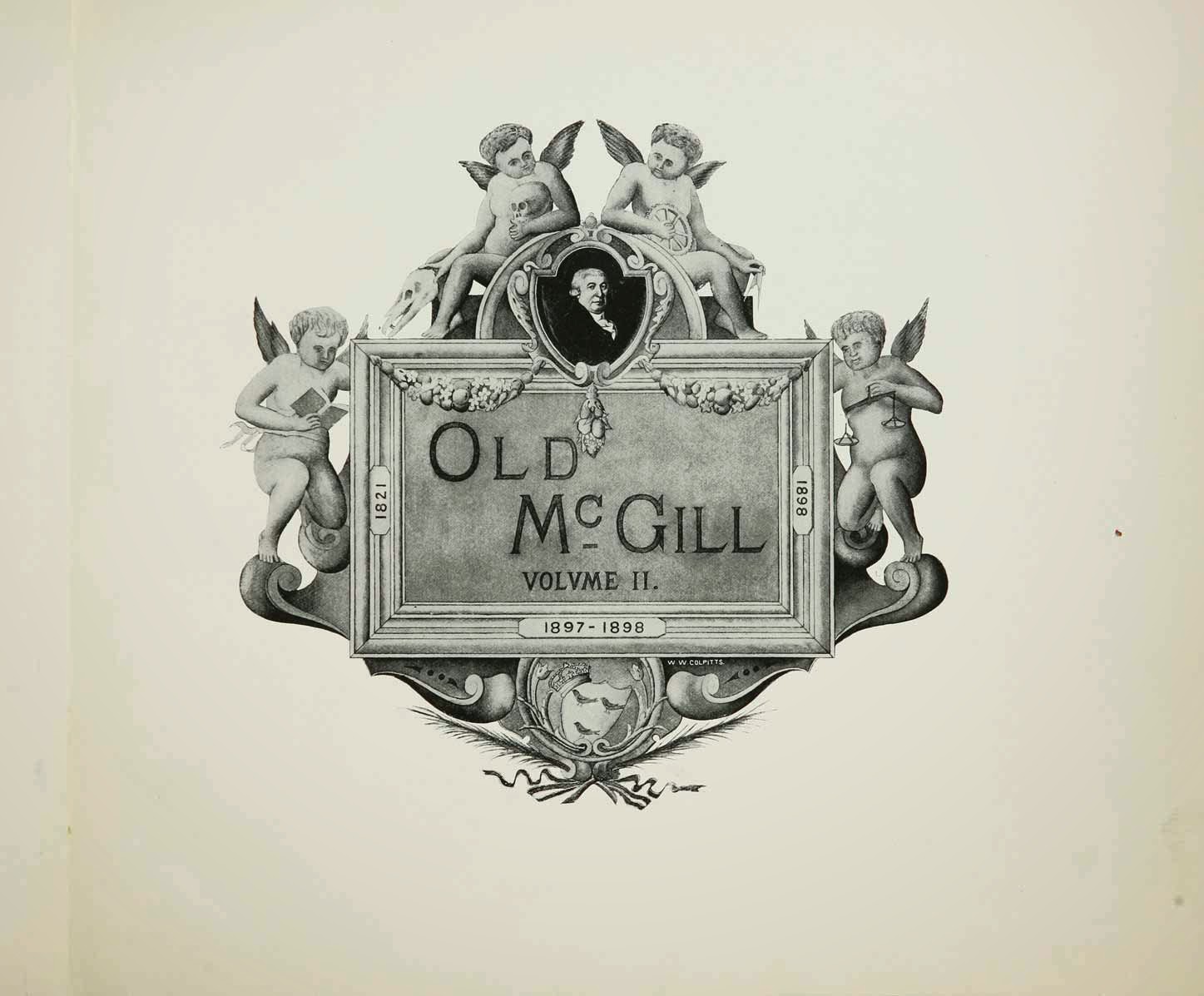
100 Years of McGill University Yearbooks Online

100 Years of McGill University Yearbooks Online
If you have an ancestor who attended McGill University in Montreal Quebec you won't want to miss this new database. The years online are 1898-2000 and you can browse or search by name.

For details see Gail Dever's blog post  More than 100 years of McGill University yearbooks digitized and available online
Page from 1899 McGill Yearbook

May 13, 2014

52 Ancestors: My Cousin Caused the Death of my Daughter-in-law's 9th Great Grandmother


52 Ancestors: My Cousin Caused the Death of my Daughter-in-law's 9th Great Grandmother
My cousin 10x removed was responsible for the death of my daughter-in-law''s 9th great grandmother. This is one of those strange-but-true stories that researchers sometimes encounter while researching family lines.

My Cousin Jean-Baptiste Hertel de Rouville 1668-1722

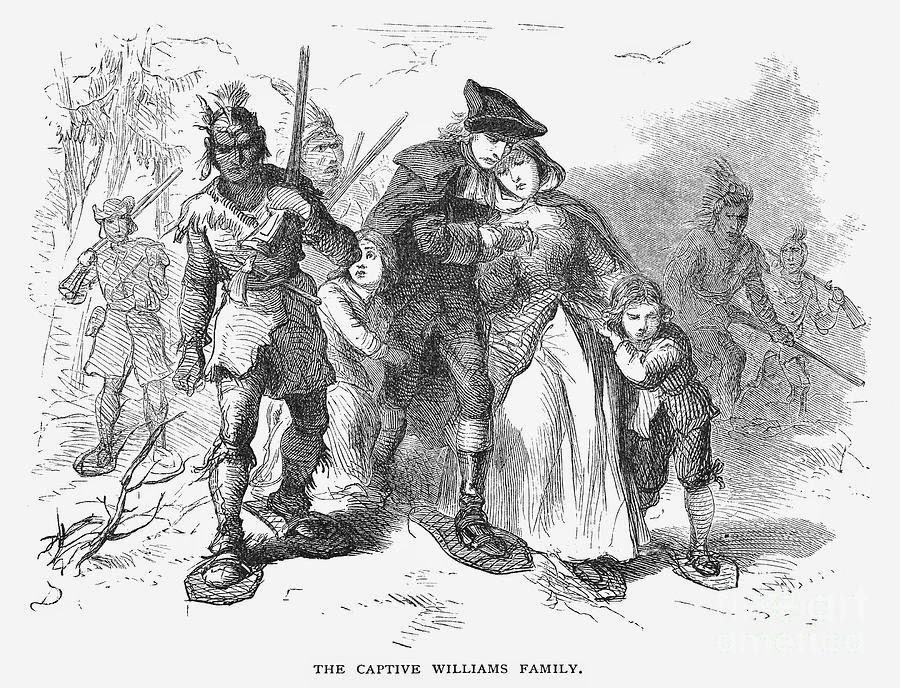
My first cousin 10x removed, Jean-Baptiste Hertel de Rouville (1668-1722), was the soldier put in charge of the Deerfield Raid in March 1704. Approximately 300 French and Native allies raided the English settlement of Deerfield, Massachusetts. 112 Deerfield men, women, and children were captured and taken on a 300-mile forced march to Quebec. Some of the captives were later redeemed and returned to Deerfield, but one-third decided to remain among their French and Native captors.

Daughter-in-law's 9th Great Grandmother Mehitable Smead Nims

Two of those captured by the French and Indians at Deerfield were Josiah Rising and Abigail Nims. These two captives chose to remain with their captors when offered freedom, and later married. Josiah and Abigail are my daughter-in-law's 8th great-grandparents. Abigail's mother Mehitable Smead Nims (my daughter-in-law's 9th great grandmother) died on the march to Quebec. Since Jean-Baptiste Hertel was my cousin, he was indirectly responsible for the death of my daughter-in-law's 9th great-grandmother.

Abigail Nims aka Elisabeth Towatogowach/T'atog'ach

Abigail, the youngest daughter of Godfrey Nims and his second wife Mehitable Smead was 4 years old when she was captured. Her mother died on the trek to Canada. A native woman Ganastarsi took Abagail on her arrival at the fort Sault-au-Recollet, she was given the name Elisabeth Towatogowach or T'atog'ach which means 'She withdraws from the water'.
"On Jun 15, 1704, the rites of baptism have been administered by me, the undersigned priest, to a little English girl named in her country Abigail, and now Marie Elisabeth, born at Deerfield in New England the (31 May O.S.) 11 June 1700 of the marriage of Geoffroi Nimbs, shoemaker, and of Meetable Smeed also deceased. The child, taken at the said place 11th March last and living in the wigwam of a squaw of the Mountains, called Ganastasi. The godmother was Damoiselle Marie Elisabeth Lemoyne daughter of Messire Charles Le Moine, Ecuyer, Baron de Longueuil, Chevalier de l'Ordre de St Louis, and Captain of a company; with Francois Bounet who said he could not sign, inquiry having been made according to law.
Several years later Abigail's brother John arranged for her return to New England but she refused to leave the Indian village. Approximately thirteen years after her capture she married Josiah Rising, another captured child.

Josiah Rising aka Ignace Raizenne or Shonatakaki 

Josiah Rising aka Ignace Raizenne or Shonatakaki was 10 years old when he was taken by his captor, Macqua, and given the name Shoetakwanni, which means 'he was taken away from his village'.

On July 29, 1715  Ignace Raizenne (Josiah Rising)  21 years old, married Elisabeth (Abigail Nims) who was 15 years old. The marriage took place in Oka.

"July 29, 1715, I have married Ignace Shoentak'ani and Elisabeth T'atog'ach, both English, who wish [to] remain with the Christian Indians, not only renounce their nation but even wishing to live as Indians. In person [the presence] of Jean Baptiste Haronhiatek, Gabriel Tsirok'as, Pierre Asonthen, Alexis Tarhi. Ignace Shoentak'ani, about 23 or 24 years, and Elisabeth, about 15 years old. Both were taken at Dierfile [sic], about 13 years ago. Maurice Quere, priest"
Eight children were born to this couple. Marie Elisabeth Nims died and was buried at the mission cemetery on 3 Jan 1747. Ignace Raizenne died at age 77 in 1771 and was buried at Oka. 

Credit: Image from http://fineartamerica.com/

May 12, 2014

Unlock the Past Genealogy Cruise

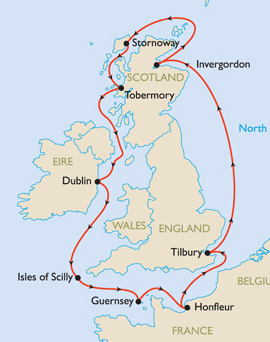
Unlock the Past Genealogy CruiseReady for a sea trip? Join the Unlock the Past Genealogy Cruise British Discovery

Date: 10 nights 19-29 July 2014
Ship: Marco Polo (Cruise & Maritime Voyages)
Cost: from £1199 twin share

Itinerary: 
  • day 1 – depart Tilbury, London – 6pm
  • day 2 – at sea
  • day 3 – Invergordon, Scotland – 7.30am-10pm
  • day 4 – Kirkwall, Orkney Islands – 7am-6pm
  • day 5 – Stornoway, Outer Hebrides – 7.30am-10pm
  • day 6 – Tobermory, Isle of Mull – 7.30am-4pm
  • day 7 – Dublin, Ireland – 8am-5.45pm
  • day 8 – St Mary’s, Isles of Scilly - 9am-6pm
  • day 9 – St Peter Port, Guernsey - 7.30am-6pm
  • day 10 – Honfleur, France –  9am-5pm
  • day 11 – arrive Tilbury, London – 9am

May 11, 2014

Sharing Memories Week 19: My Mother the Adventurer!

Join us for Sharing Memories - A Genealogy Journey We focus on memories of our parents, grandparents and others. We write for our children and grandchildren, that the memories are not lost over time. I hope you are keeping a journal, whether it is private or public, and joining us as we write our memoirs.

My mother was a character. She wasn't a warm fuzzy mother but she was into living life to the fullest.  She was fiercely independent and proud and she taught me that you should not depend on others to take care of you. You must be self-sufficient in all ways, and make your own way in the world.

A tiny woman, only 5'2" tall, she made up for her lack of height with a feisty attitude. No one would force Mom to back down! When she was in her mid 50s she decided to retire, sell all her possessions, buy a Winnebago and travel. She convinced her mother (in her 70s) and older sister to go with her. 

Mother, Lily and Grandma Ruth traveling in their Winnebago
Mom took a mechanics course to learn how to fix the car they towed behind them.  They traveled all over N. America and Mexico for many years. Mom did all the driving, Lily (her sister) did the cooking and cleaning. They were even written about twice in Motor Home Magazines!
When mother was 80 she decided to hike through Australia with nothing but a pink Barbie backpack. She wanted a hot air balloon ride for her 80th birthday and was determined to do it in Australia. So off she went! On her own.

That was the start of 10 years of constant travel. Every year she took one major trip - to S. Africa, to Russia, to China, New Zealand, back to Australia, to Denmark, Sweden, Finland and many other places. In between her big trips she took what she called "little jaunts" - to England, New York, British Columbia, Nova Scotia, Alaska... I can't remember everywhere she went, it seemed she was always off somewhere.

She usually went alone, sometimes she booked a tour, but S. Africa she did on her own which was very worrisome to me. Her last big trip was around age 90 when she and her younger sister went camping in the Australian outback for 2 weeks. Everyone in the group was in their 30s except Mom and her sister.

Godfrey, Mother & UltraLight
At age 60 she learned to fly an airplane and was within a few hours of getting her pilot's license when she stopped the lessons. I don't know why, Mom would never let on she couldn't do something, but she might have quit simply because she only took the lessons so she could fly the ultralight that she and her companion were building!

In her 70s she moved to British Columbia with her companion and they began going on little impulsive adventures. She phoned me once from a highway en route to Alaska. She and Godfrey (her companion) had decided on the spur of the moment to take a pup tent and go to Alaska so off they went.

Another time she phoned from somewhere on the West coast of America, saying she was on her way to the Rose Bowl Parade. She and Godfrey had gone to Tim Horton's for a coffee and over coffee decided to get in the truck and start driving until they reached California. They didn't even go home to pack a toothbrush or clothes, they left from the Coffee Shop.

When she would visit me at my home she'd bring a tent and pitch it in my backyard. I was horrified the first time that happened, and begged her to come inside and sleep in my guest room. She refused, saying she preferred to sleep under the stars. I was very upset and told her the neighbours would think I was a horrible daughter. She smiled, patted my hand and said "Dear, just let me do my own thing"

And that was my mother - doing her own thing until her death at age 93. A character who led an active, full and interesting life!


6 Generations of Mothers on Mother's Day

Six Generations of Strong Females on International Women's Day 
Happy Mother's Day to all mothers past and present. The collage above shows 6 unbroken generations of my female lineage - from one mother to the next.

Starting from the left we have Sarah Stead, my great-great grandmother. Next is Sarah's daughter Sarah Simpson, my great grandmother. Then we have Sarah Simpson's daughter Ruth Fuller, my grandmother. Then comes Ruth's daughter Joan, my mother. Then me and then my daughter Judy. Then our direct maternal line is done as my daughter had sons but no daughters.

These 6 mothers had a total of 24 children. Sarah Elvery Stead died at the age of 31 and of her 6 children, only 4 lived to be raised by step-mothers. Sarah Jane Stead Simpson lived to a good age of 89 and raised 6 children. My grandmother always spoke of her mother with love and affection. My grandmother Ruth Simpson Fuller had 3 children and lived to be 90 years old. Then my mother Joan had 4 children and lived to ripe old age of 93!

My mother was an interesting character with an adventurous spirit. I'm going to talk more about her today in my weekly  Sharing Memories blog post. If it were later in the day I'd raise a glass to all the mothers who went before me but because it's early morning I'll just take a few moments of silent thank you to all of them.

May 10, 2014

Soldier's Letter from WW2 found Sixty Years Later and Returned

Representation of WW2 letters
This is touching story about a woman who found a letter written by a soldier that was 60 years old. She tracked down descendants and sent the letter home.

The letter was found in a pile of paperbacks that Sandi Blood purchased and was dated November 1951 and sent from a G. LeBlanc. U.S. Army Pvt. Gilles LeBlanc wrote the three-page letter to his girlfriend, Carole Petch in Toronto, Ontario Canada. 

With the help of social media, Blood was able to find the now 83 year old soldier living in Detroit Michigan

Read the complete story at "Woman finds love letter 6 decades old and tracks down soldier who wrote it" on the Washington Post.

May 9, 2014

Mother's Day Special on DNA Kits

Don't miss out on this opportunity to buy Ancestry.com DNA kits at a reduced price! 

You can purchase these DNA kits at this low price  until May 12 11pm PST

Read about Olive Tree Genealogy's DNA journey to find out what DNA can tell you about your ancestral origins. Connecting with new cousins is just one of the many benefits. 


May 8, 2014

The Childen's Home Website Now Online

The Childen's Home Website Now Online
The first phase of The Children's Home website by Peter Higginson is now live. According to Peter who also created The Workhouse website:
The Children's Homes website aims to provide information on all of the many and varied institutions that — for whatever reason — became home for thousands of children and young people in Britain. They include a wide variety of establishments ranging from orphanages, homes for those in poverty, and children with special needs, through to reformatories, industrial and approved schools, training ships, and hostels.
Peter did an amazing job with his Workhouse website and I have no doubt that his Children's Home site will be as detailed. 

If you have British ancestors from the United Kingdom you won't want to miss this. For those looking for ancestors in N. American Orphanages please see Orphan & Orphanage Records for links to online databases

Credit: Photo of orphan children courtesy of Family Tree Connection.

May 7, 2014

Author of First Book I Owned at Age 10 is Dead. RIP Farley Mowat


Author of First Book I Owned at Age 10 is Dead. RIP Farley Mowat
Farley Mowat, well-known Canadian author is dead at age 92. The first book I ever owned  was Farley's The Dog Who Wouldn't Be. I was so excited to own an actual book. I was 10 years old and reading was very much encouraged in our family. 

I read everything I could get my hands on - my mother's Reader's Digests, True Detective Magazine, mother's collection of Frank Yerby books. I know, not the usual fare for a young child but my mother did not believe in censorship. Her theory was that if I read something not meant for a child I probably wouldn't understand it anyway!

But The Dog Who Wouldn't Be was the first book that was mine. I could write my name in it. And I did. I loved the story and read that book so many times it almost fell apart. The next book I was given was "Little Women" by Louisa May Alcott and I loved it too. But then came "Never Cry Wolf" by Mowat and I was hooked. I was a confirmed Farley Mowat fan. 

I've found that the majority of genealogists love to read. They love libraries and archives and reading pretty much anything they can find, not just for research purposes. So fellow genealogists, if Farley Mowat's novels are new to you, please do yourself a favour and check out one of his books. They are well worth your time.

RIP Farley.

May 6, 2014

52 Ancestors: William Solomon and His Ojibwa Wife

52 Ancestors: William Solomon and His Ojibwa Wife
Voyageurs: Lewis Solomon on left
I'm writing about my daughter-in-law's 6th great grandfather William Solomon as part of Amy Crow's Challenge: 52 Ancestors in 52 Weeks .

William Solomon was the fourth child of Ezekiel Solomon, a German Jewish merchant who had come to New France from Berlin during the Seven Years' War and acted as a supplier to the British army. Following the conquest, Ezekiel Solomon, one of the first non-French fur traders to penetrate as far as the upper Great Lakes, spent part of each year in the interior and the remainder at Montreal, where William apparently received some education. 

By the mid 1790's William was working in the interior as an employee of the North West Company, and he evidently lived for some time with his parents on Mackinac Island (Michigan). There he and an Ojibwa woman, Agibicocoua, had an illegitimate daughter, who was baptized on July 28, 1796. In 1797, 1799, and 1800 he fathered three other illegitimate children. Shortly thereafter he appears to have married Marguerite Johnston, who had been born on Mackinac Isand. The were to have ten children.

William is the 7th great grandfather of four of my grandchildren and his life story is fascinating. His son Lewis Solomon wrote the following narrative:

My name is Lewis Solomon-spelled L-e-w-i-s-though they call me Louie. I was born on Drummond Island in 1821, moved to St. Joseph Island in 1825, back to Drummond Island again, and then to Penetanguishene in 1829. 

My father's name was William Solomon, Government interpreter. His father, Ezekiel Solomon, was born in the city of Berlin, Germany, came to Montreal and went up to the "Sault." [Sault Ste Marie] My father was appointed Indian interpreter by the British Government and was at Mackinaw during the War of 1812, then moved to Drummond Island with the British forces, and afterwards to Penetanguishene. 

My mother's maiden name was Johnston, born in Mackinaw, where she and my father were married. She died in Penetanguishene. My father received his discharge under Sir John Colborne, retiring on a pension of seventy-five cents a day after a continued service of fifty-six years with the Government, and he died at Penetanguishene also.

When the military forces removed from Drummond Island to Penetanguishene, the Government authorities chartered the brig Wellington to carry the soldiers, military and naval supplies, and government stores; but the vessel was too small, and they were obliged to charter another vessel, and my father was instructed by the Government to charter the schooner Hackett (Alice) commanded by the owner, Capt. Hackett.

My father came to Penetanguishene in another vessel with the officers and soldiers. The rest of the family left Drummond Island the next spring (1829). We started on the 25th of June and arrived at Penetanguishene on the 13th of July, coming in a bateau around by the north shore, and camping every night on the way.

My mother, brother Henry and his wife and eight children, myself, Joseph Gurneau and his wife, and two men hired to assist (Francis Gerair, a French-Canadian, and Gow-bow, an Indian), all came in one bateau. We camped one night at the Hudson's Bay Company's fort at Killarney. We landed at the Barrack's Point, near the site of the garrison, and where the officers' quarters were erected, now occupied as a residence by Mr. Band, the Bursar of the Reformatory. We camped there in huts made of poles covered with cedar bark. 


There were only three houses there: a block-house, the quarters of Capt. Woodin, the post-commander; a log-house covered with cedar bark for the sailors near the shore; and a log-house on the hill, called the "Masonic Arms," a place of entertamment kept by Mrs. Johnson.

William brought the Drummond Island settlers to Penetanguishene. They left Michilmackinac on November 16, 1828. A severe snowstorm slowed their progress and the Brig Wellington with its 91 passengers arrived in Penetanguishene November 28, 1828. He died at Penetanguishene on Jan. 26, 1867 and is buried at the old St. Anne's cemetery beside his wife Marguerite.

There is quite a bit of biographical information on William Solomon, such as the following: 

Solomon supported his growing family by working at Michilmackinac, on Mackinac Island, as a clerk for the merchant Joseph Guy and occasionally by doing some interpreting, since he had learned several Indian languages. In 1809 his father died, leaving him land on Mackinac Island and on the mainland at Saint Ignace (Michigan). Though Mackinac had been turned over by the British to the United States in 1796, in accordance with Jay's Treaty, Solomon felt no strong loyalty to the Stars and Stripes. After war broke out between the United States and Great Britain in 1812, a force assembled by Captain Charles Roberts swiftly descended upon Mackinac Island and captured the fort and town for the British on July 17, the first military action of the war and a source of some satisfaction to Solomon. By February 1814 he had secured a position with the Indian Department as an interpreter at 4s 6d per day.

Since the number of British soldiers at Mackinac Island was small, their Indian allies were vital for their survival. When the Americans attempted to recapture the island in 1814, it was the Indians who swung the battle in favour of the British. The Americans never took Mackinac, but under the Treaty of Ghent it was returned to the United States. In July 1815 the British under Lieutenant-Colonel Robert McDouall, withdrew their forces. The following month they settled on nearby Drummond Island and Solomon and his family accompanied them. Solomon was provided with a government lot on which he built a home for his family and established a small farm. His duties were to make out requisitions for provisions and to order the repair of the Indians's guns.

Along with Jean-Baptiste Assiginack and a few others, Solomon was one of the interpreters kept on at Drummond Island as part of the peace-time garrison, which included the Indian Department establishment under the superintendence of William McKay. Though characterized somewhat harshly by John Askin, of official of the department in 1816 as a "sober man" who could not interpret at Indian councils but who "may answer about a post to see an equal distribution of Provisions," Solomon did in fact interpret at various councils. As well, when the Indians of the Upper Lakes flocked to Drummond Island to receive the presents which the British doled out to ensure their loyalty, Solomon probably participated in distributing the goods. In 1816, when the Indian Department was reduced, he lost his job. He was reinstated, however, on May 29, 1821.

The British were not to remain long on Drummond Island, for when the border between Upper Canada and the Unites States was surveyed, it was found to be American territory. Once again the garrison, including Solomon, David Mitchell, and other Indian Department officials, was forced to move, this time to Penetanguishene on Georgian Bay, where a British naval establishment had already been located. In late 1828 a brig was chartered to move the forces, but when it proved too small Solomon was instructed to charter a schooner as well. He did not accompany it, however, since he had been ordered to spend the winter at St. Joseph Island, where he had lived briefly in 1825, in order to inform the Indians about the British move. In all, the families of between 75 and 100 soldiers, voyageurs, and small traders came from Drummond Island to Penetanguishene, which Lewis Solomon, a son described as "then mostly a cedar swamp, with a few Indian wigwams and fishing shanties."


In 1829 William Solomon and his family finally moved to Penetanguishene, although his livestock and implements were lost in a shipwreck on July 12 of that year. He built a home nearby, on lot 105, and continued to work as an interpreter. In 1837 he attended, along with Thomas Gummersall Anderson, Samuel Peters, JARVIS, Jean-Baptiste Assiginack and others, a major Indian conference on Manitoulin Island, which was graphically described by Anna Brownell Jameson ( MURPHY) in her account of travels in Upper Canada. On a longer trip, made in the early 1840's for the distribution of presents, he served as interpreter for a party that included Lord Morpeth, Lord Lennox Jarvis, and 56 voyageurs from Penetanguishene; they visited Manitoulin, Sault Ste. Marie, and Detroit.

Solomon received his discharge on June 30, 1845 and retired on a pension of 75 cents a day, according to his son Lewis. William afterwards moved into town, where he died and was buried in the cemetery of Ste. Anne's Church. Surviving him were a large family and his second wife Josephine Legris, whom he had married late in life.

[Source: Dictionary of Canadian Biography, Volume viii page 830-31 c. University of Toronto Press]

May 5, 2014

May 4, 2014

Sharing Memories Week 18: Your Favourite TV Shows

Sharing Memories Week 18: Your Favourite TV Shows
Sharing Memories is a series of weekly prompts to help all genealogists (including me!) with writing up memories of our ancestors and our childhood. 

We all love to find a diary or letters written by great grandma or grandpa where they talk about their lives and share their memories. Think how excited one of your descendants will be to read about your memories and your stories! These stories will be lost after a few generations unless we preserve them. And what better way than in a weekly themed post. 

This week's prompt is "Favourite TV Shows" What were yours? What did your parents watch? How old were you when your family got a television set? 

I was about nine years old before we had a TV. It was a little black and white in a cabinet. I didn't get to watch much though. That was my dad's "empire" and when he got home from work he switched it to whatever he wanted to watch even if you were in the middle of a great cowboy show!

I do remember watching Rawhide and a couple of other westerns but I don't know how old I was. There was no such thing as Saturday morning cartoons in our house -  that TV stayed off until after supper. Then my dad put on what he wanted. 

He loved watching Red Skeleton and Lawrence Welk, especially if the Lennon Sisters were on. But I wasn't allowed to stay up even on the weekends to watch, so I didn't grow up watching television very much. 

So for me television isn't my first choice of leisure activities. I was always more of a reader and would escape into a good book whenever possible. Up to about 5 years ago when I developed some eye conditions which made reading difficult, I still rarely watched TV. Now it's my escape after supper as I can't read or work on my computer much after mid-afternoon rolls around. 

What was your favourite TV show? How old were you when your parents got a television or did they always have one?

May 3, 2014

Prosapia Genetics - Worth the Money?

Prosapia Genetics - Worth the Money?
Yesterday I decided to check out a website that has the genealogy community buzzing. The Examiner called it a "Groundbreaking GPS tool [that] finds your ancestors, genealogy, family tree and history" 

Basically it is being touted as a Geographic Population Structure (GPS) tool, created by Dr Eran Elhaik from the University of Sheffield's Department of Animal and Plant Sciences and Dr Tatiana Tatarinova from the University of Southern California, which can locate your actual ancestor's home from 1,000 years ago.

According to the creators "What we have discovered here at the University of Sheffield is a way to find not where you were born – as you have that information on your passport – but where your DNA was formed up to 1,000 years ago by modeling these admixture processes."

That sounded fascinating but I was somewhat sceptical. How can a GPS tool (or any tool for that matter) take all your ancestral lines as shown by your DNA, and come up with ONE "ancestral village" of origin? As my good friend Jennifer Zinck mentioned, that's akin to taking the average of all your ancestors instead of the sum.

Prosapia Genetics Website

To help people find their roots, the researchers  developed a site called  Prosapia Genetics to make this DNA tracking available to the public. They claim that “Anyone who has had their DNA genotyped (an estimated one million people in the USA) can upload their results and use GPS to find their ancestral home."

The site indicates that it is as "easy as 1, 2, 3" Basically you either purchase their DNA kit or you pay for a GPS map and upload your raw data file from a DNA company where you have already tested. Then you view a GPS map showing your ancestral home.

I had to try it. It looked like fun and I was curious as to whether or not my skepticism was well-founded or I was being too critical.  I decided to go with my brother's DNA instead of mine. Once you decided to upload your DNA you pay for the GPS map. There are 3 choices ranging from $29.99 (U.S.) to $42.99. I decided to go with the Super Test at $42.99 because it used the most reference populations. According to the online FAQ, the more reference populations used, the more accurate the result (which is only common sense).

The Map of My Ancestral Home?

After uploading my DNA data it only took about an hour before I got an email from Prosapia Genetics stating his map was ready. To my surprise all it showed was one red marker in a wooded area in Yorkshire England near Driffield. This was supposedly his "ancestral home". 

My mother's lineage is solidly British from Kent England until the 1600s except for one family - the Stead family, who left Yorkshire in the mid 1700s for Kent. Okay at least we do have a known Yorkshire connection. But it's only ONE family out of hundreds of other ancestors.

My father's lineage is Ireland, Holland, Germany, Native American, a bit of French, a smattering of England from Cheshire and Suffolk. I have researched these lines back to the 1600s and there is not a trace of any ancestor from Yorkshire.

There may indeed be other Yorkshire ancestors in our lineage. But Prosapia's result is NOT indicative of my "ancestral home"! That is because there is not just one ancestral home but many when we look at all our ancestors. To my mind the map should have shown me several markers in different countries - in Ireland, in Holland, in Germany, in France, and so on.  I hoped it would show me some specific locations in countries that showed on my Ethnicity results from the different DNA companies I had tested with.

I wish the creators had been more precise and accurate in their wording. The Prosapia Genetics website states "Our first tool, GPS, will tell you where your DNA was forged" but that is inacurate and misleading. It would be more accurate if it said "Our first tool, GPS, will tell you where ONE PORTION OF your DNA was forged" 

Caveat

Please don't misunderstand me. I am not saying this is a scam. I'm not trashing the company. I am saying that I think it's incorrect and even misleading to claim that their technology can find an individual's "ancestral home".  I am saying I paid a lot of money for very little. I'm saying I was extremely disappointed in the resulting map.

I would love to hear from any of my readers who obtained a GPS map using Prosapia Genetics. What was your opinion?

May 2, 2014

Farewell to a Fellow Genealogist

Farewell to a Fellow Genealogist
J. Brian Gilchrist passed away in Ontario on May 1 2014. He was a good man and a very learned genealogist. In fact he was scheduled to speak at the OGS seminar this weekend. I met Brian virtually several years ago when I was trying to find the exact location of my father's grave.

I knew what Cemetery my father was in (St. James Crematorium in Toronto) and at the age of 19 I tried to find him so I could visit. Cemetery office staff  told me that he was in an unmarked grave in what is known as Potter's Field and they did not know the exact location.  Many years later I mentioned on a mailing list that I desperately wanted to find his grave and visit. Lo and behold, Brian stepped in and offered to help.

Within 2 days I had the exact location of my father's grave and a name of the person I should contact about having a memorial marker placed or my father's ashes moved. Within a month my father's ashes were sent to my home and I arranged for re-interment in a Cemetery in Guelph where his mother, father and brothers are all buried.

And so 49 years after my father died suddenly at the age of 47, we held a Memorial Service for him in Woodlawn Cemetery in Guelph Ontario.

I cannot explain how much finding my father's ashes meant to me. I am  deeply indebted and grateful to Brian for his generous spirit and for helping a complete stranger find peace.

Farewell Brian and may you Rest in Peace. 

Brian's funeral will be held at The Cathedral Church of St. James
Diocese of Toronto - Anglican Church of Canada at 11 am, May 5th, 2014
65 Church Street, 

Toronto, ON 
M5S 2E9
and will be conducted by Sub-Dean & Vicar The Reverent Canon David Brinton OGS


May 1, 2014

Victorian Reform School & Prison Records Online - A Contest!

Victorian Reform School & Prison Records Online
John Wormald age 11
Reform School 1892
Ancestry.co.uk, Ancestry.ca and Ancestry.com have recently published some fascinating reformatory school and prison records from West Yorkshire. The West Yorkshire Collection 1779-1914 details the crimes of thousands of boys admitted to Calder Farm Reformatory, East Moor Community Home School and The Shadwell Children’s Centre.
 
The records are available using these links:  
I spent a very enjoyable afternoon searching these records for my son's Yorkshire ancestors on his father's side.  They are full of details! For example I found the Reform School Record for the 11 year brother of his great-grandmother Kate Wormald. Little John Wormald was sent to Calder Farm Reform School in 1892 after a series of thefts. His records included his photo and details of his misdeeds and the punishment meted out by his parents (6 lashes of a birch rod each time he stole something). Young John was noted as having red hair, blue eyes and freckles.

The records indicate that John was hanging with a bad crowd and so in desperation his parents sent him to live with an uncle. John then stole a substantial sum of money from his uncle's coat pocket and ran off with one of his friends. It was then he was arrested and sent to Reform School for 5 years.

What I also found fascinating was that the Reform School records also had followups of the children after they were discharged. I noted that several of the boys went into the Army after discharge and appeared to have changed their lives. Young John Wormald went into the Army and there are notes for several years about his life after discharge. It seems that England was at that time trending towards actual reform and not punishment of young offenders.

If you would like to participate in a contest being offered by Olive Tree Genealogy, I am able to offer a 3 month subscription to Ancestry.com as the prize. 

Entry Details

1. Search through either the West Yorkshire England Reformatory School Records 1856-1914 or the
West Yorkshire, England, Prison Records, 1801-1914 and choose an interesting case.

2. Post a brief summary of the case you found interesting as a comment on this blog post. Be sure to include the name of the individual and the date of his or her committment and whether the person was in the Reform School Records or the Prison Records. Also include your full name.

3. Share the URL for this blog post. You may share it using Social Media such as Facebook, Twitter, Pinterest, Google+ etc, or on your own blog or newsletter.

Contest Rules:
1. No purchase necessary.
2. The  most interesting entry wins. One winner will be chosen from entries received. See details above for entry requirements
3. The contest ends at midnight EDT Monday May 5, 2014
4. You are responsible for anything in regards to the legality of entering a contest in the area in which you live.
5. The winner's name will be posted here on Olive Tree Genealogy blog on Wednesday May 7, 2014. Winner must then contact me at otg.giveaway@gmail.com to claim their prize.
Please note that if you do not already have a subscription to Ancestry.com you will be required to create a free account in order to view the records.